Showdown
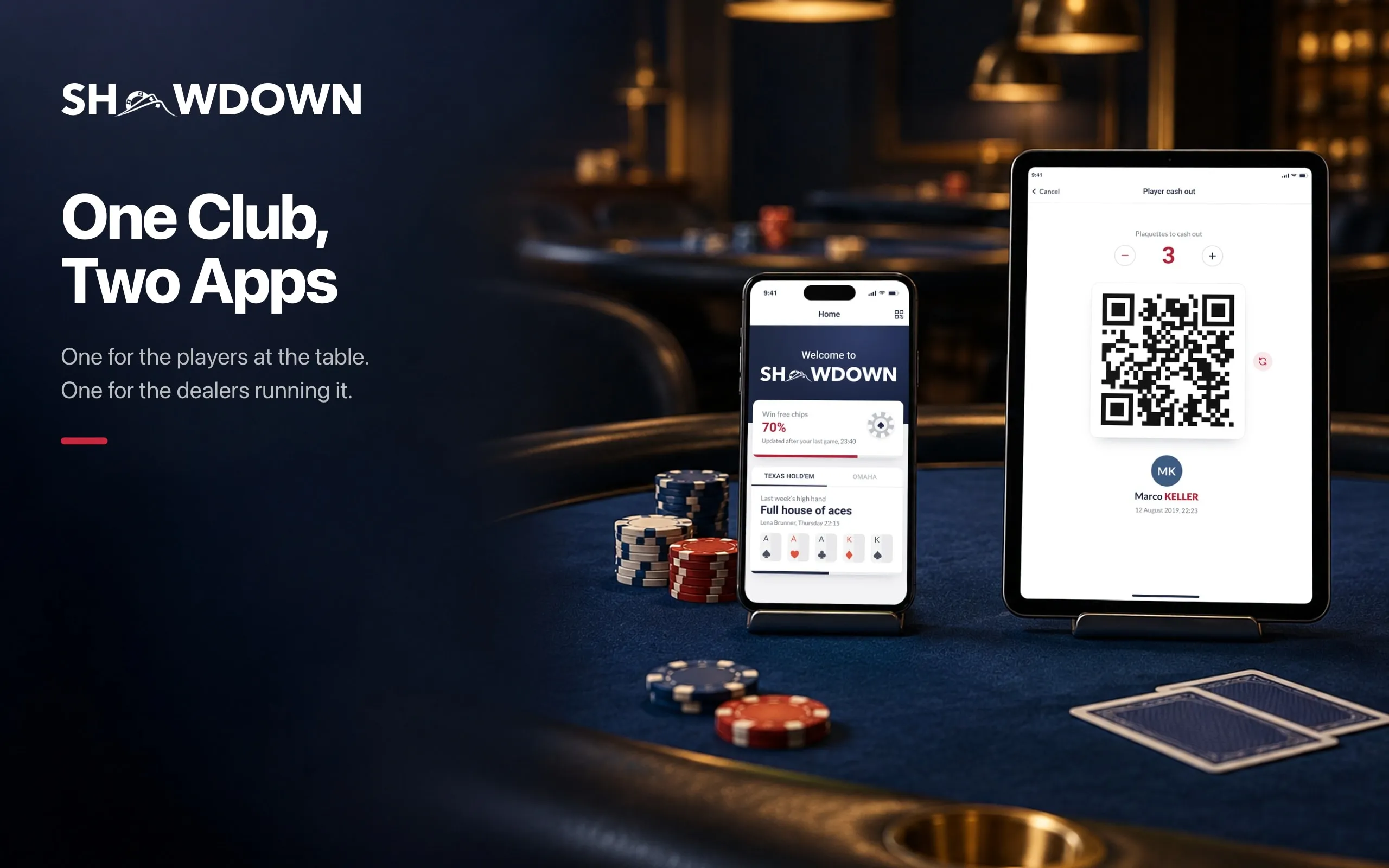
One club, two apps: one for the players at the table, one for the dealers running it.
- Client
- Showdown poker club, Switzerland
- Platforms
- Player and dealer apps, tablet and wall screens
- Scope
- Product design, identity, print
The situation
Showdown is a members’ poker club in Switzerland, open six nights a week, with daily freerolls and a high hand jackpot. It rewards regulars with a rake back that counts hours played and pays out in plaquettes. Players cash them out, or bring two to the Transformer, a club event that turns plaquettes into a tournament trip to Casino Bregenz.
In August 2019 the club’s brief asked for the software to run this: a member list, a record per member with notes, and every hour played and every plaquette cashed out, with the date, time and amount.
That loop touches the player’s phone, the dealer’s device at the table, the cash-out screen, a waiting list on the wall and the room itself, down to the felt and the chips.
The system behind it
- Data
- Members, tables with nine seats, sessions, games with a type and a limit, hours played, plaquettes earned and cashed out, and staff notes.
- Rules
- A seat belongs to one player per session. A dealer starts and stops every game. Every cash-out belongs to one member at one moment, and a Transformer entry costs two plaquettes.
- People
- Players on their phones, dealers running the tables, staff looking after members, and players in the room waiting for a seat.
Decisions
Hours played, made visible
What brokeA reward counted in hours played is invisible unless the app shows it building.
What I decidedHome opens with progress toward the next plaquette, as a percentage and a bar. At 100% the chip turns red and a message gives the win, the new total and one next step: cash out from your account. Account puts Hours played and Plaquettes side by side above a single Cash out button.
The trade-offA percentage shows how close the next plaquette is, not how many hours it takes.
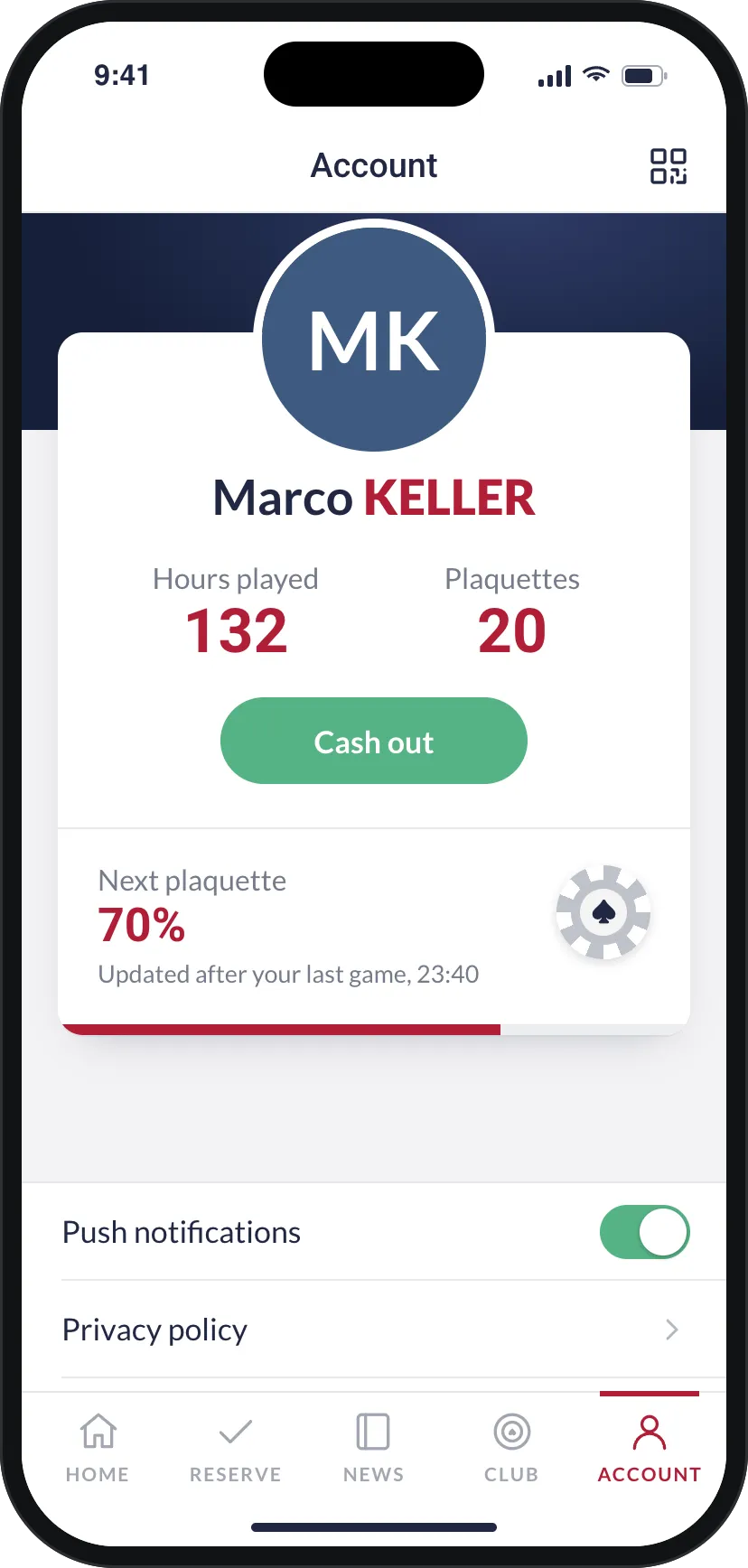
Two numbers and one action, with progress to the next plaquette below. The seat map is the club’s own table
What brokeA seat number means little unless players can see where it sits at the table.
What I decidedReserve draws the table from above in the felt I designed for the room: the navy oval, the rail line, the dealer’s place and the wordmark. Its nine seats are green or red. Picking a seat and reserving it are two steps, and once it’s reserved the same button cancels.
The trade-offOne drawing serves every table only while the tables share a shape. A different table would need its own map.
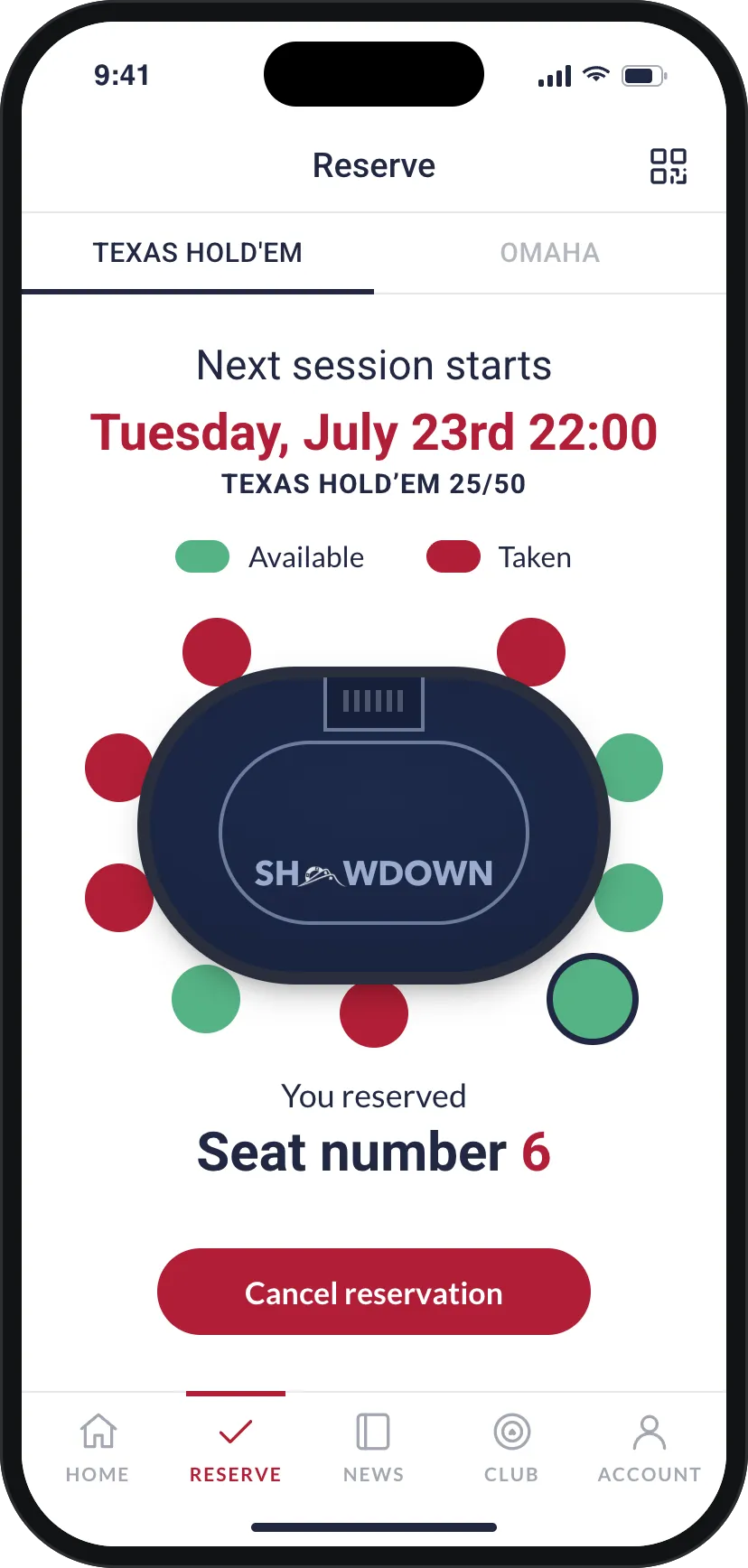
A reserved seat. The table is the felt the club plays on. One question per screen for the dealer
What brokeDealers set up a game at the table, with players already sitting down.
What I decidedStarting a game takes three short steps: the table, the game type (Texas Hold’em, no limit, or Omaha, pot limit), then the limit. Each step repeats the answers so far above the question, and Next stays grey until there is an answer.
The trade-offThree screens where one form would fit: two extra taps on a job done once per game.
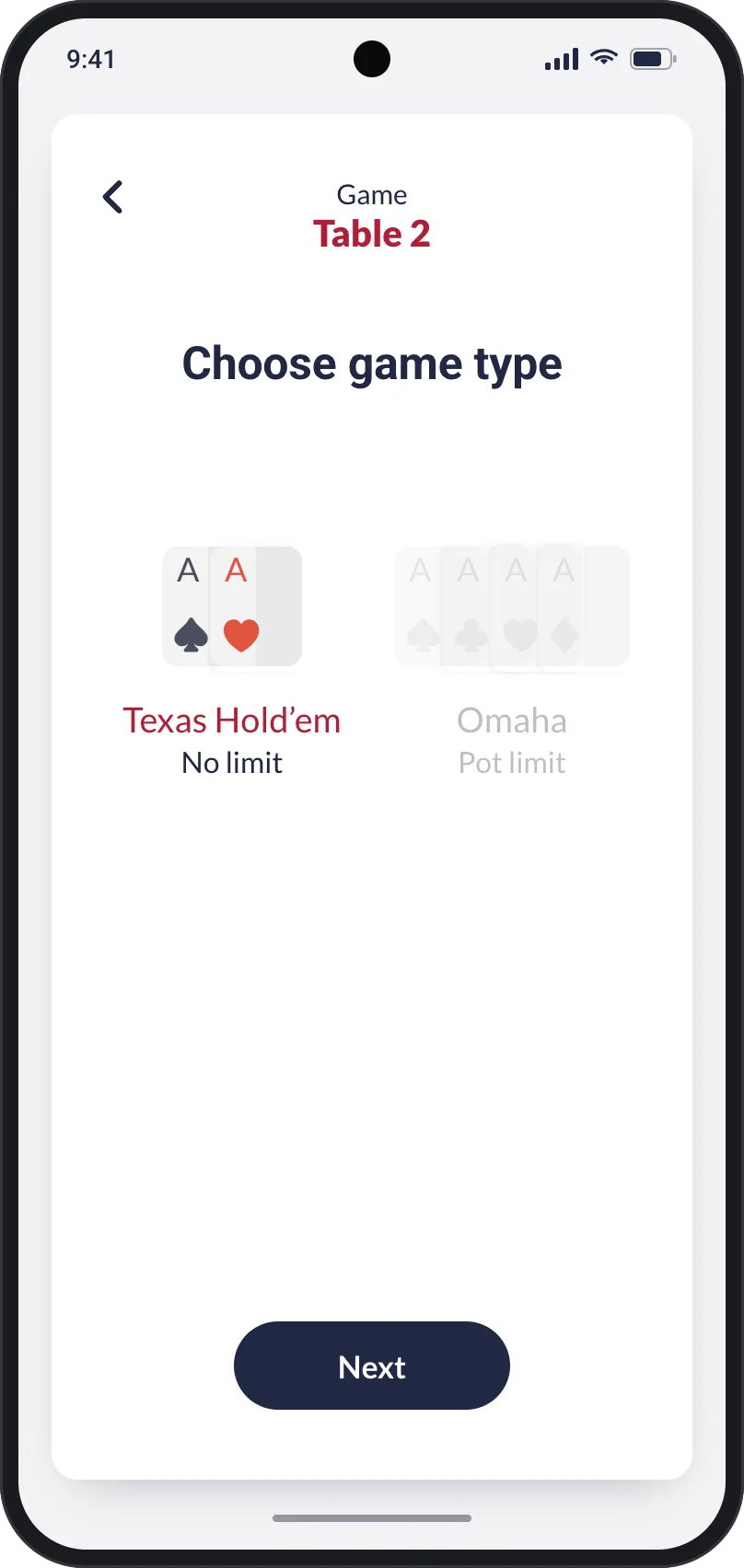
Step two of three. The table chosen in step one stays above the question. Every hour lands on the right member
What brokeHours played turn into plaquettes, so every seat at a running game has to belong to a member.
What I decidedThe running game shows seats 1 to 9 with a timer, the same nine seats players reserve. An empty seat has an Add player button: the dealer types a few letters of the name, or scans the player’s QR code.
The trade-offSearching by name is slower than a scan, and similar names sit close together in the results. Surnames lead, in capitals, to tell them apart.
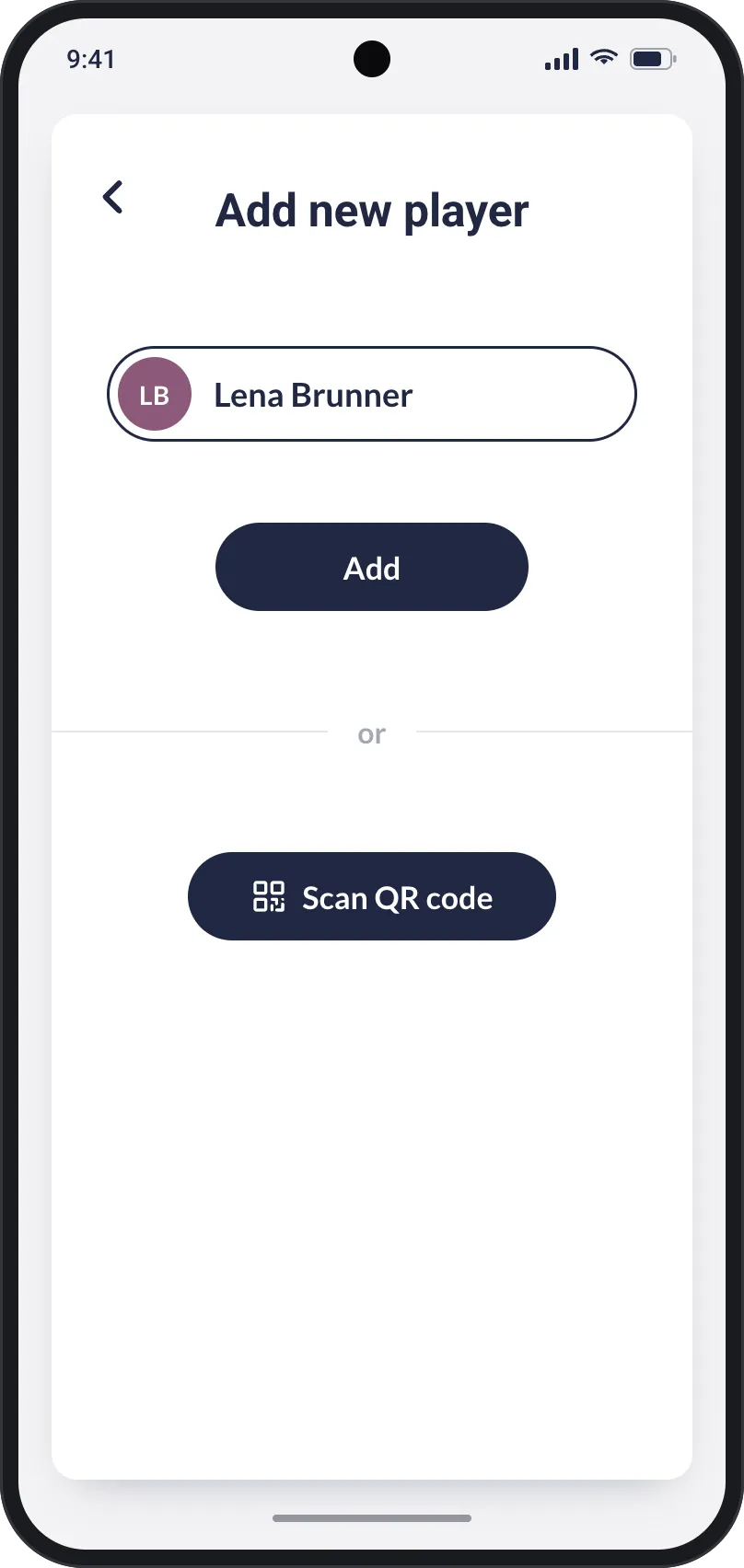
Each seat goes to a member, found by name or by their code. Every cash-out has a name and a time
What brokePlaquettes are worth something, so a payout nobody can trace leads to disputes the club can’t settle.
What I decidedCash-out asks for one number, the plaquettes to pay out. The screen then shows a code with the member’s name and the date and time, and the dealer scans it. Each cash-out lands on the member’s record with its date, time and amount.
The trade-offA payout always needs a dealer and a device. Players can’t cash out on their own, and that is the point.
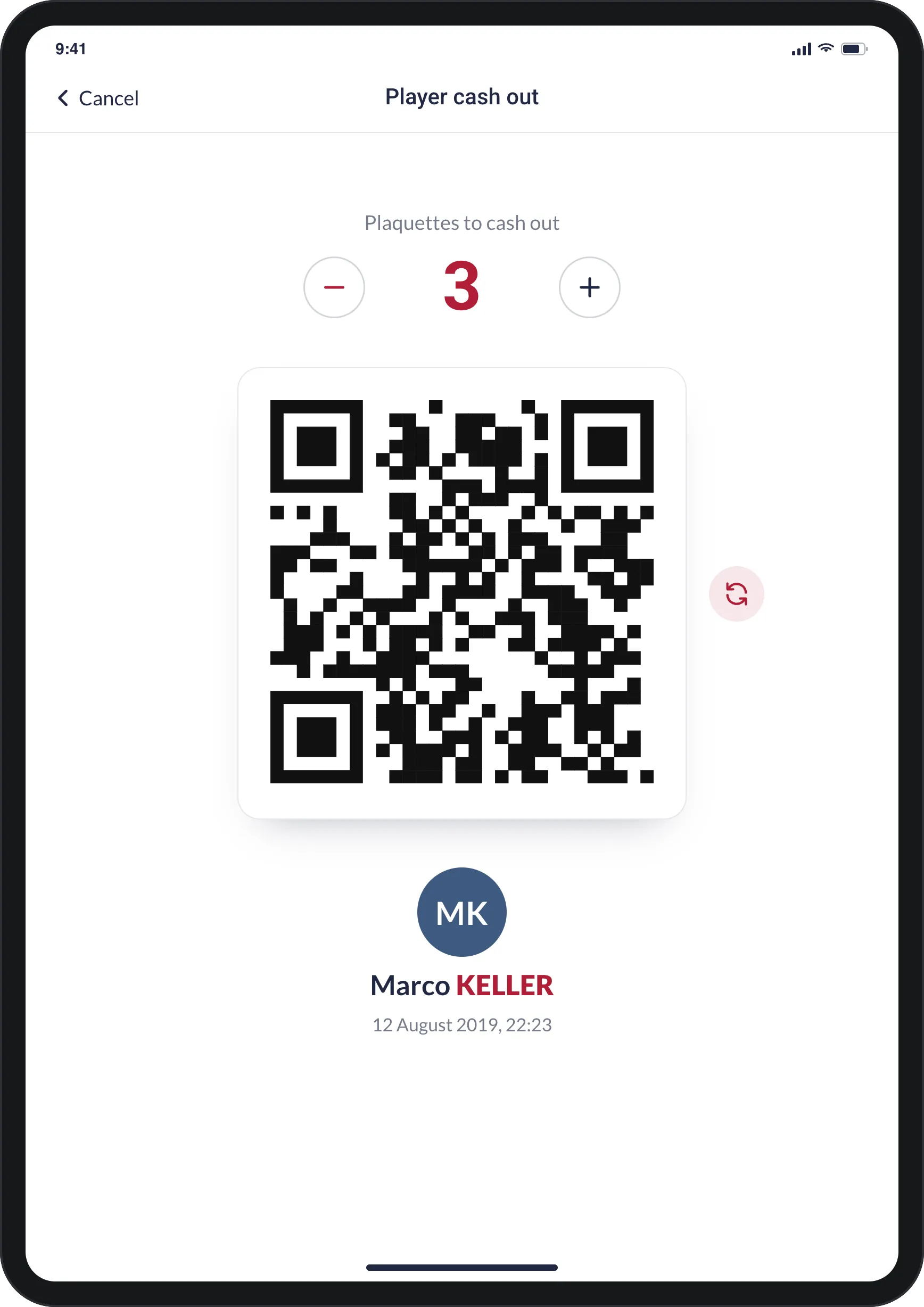
One number to choose, then a code tied to a member and a moment. The dealer scans it.
What changed
The club used the apps at its tables.
My part
I designed all of it: the player and dealer apps, the cash-out and wall screens, the logo, the table felt, the chips and the print.
The apps came first, in 2019. I kept designing the club’s print until 2023: event flyers, anniversary editions, tournament posters and an advent calendar.
More screens
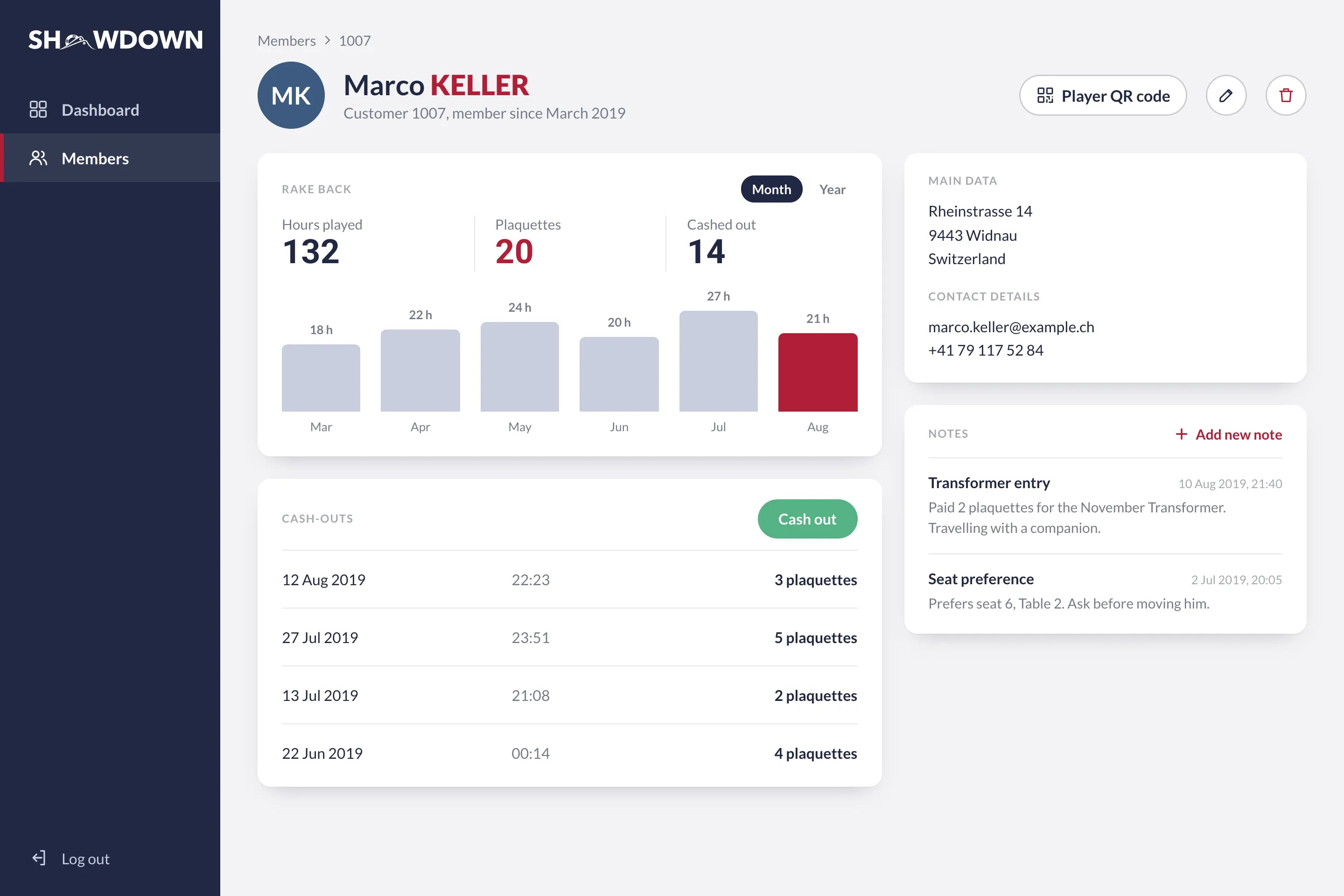
The member record from the brief: hours by month, plaquettes, every cash-out and staff notes. Rebuilt from the 2019 brief, since the original files are lost. 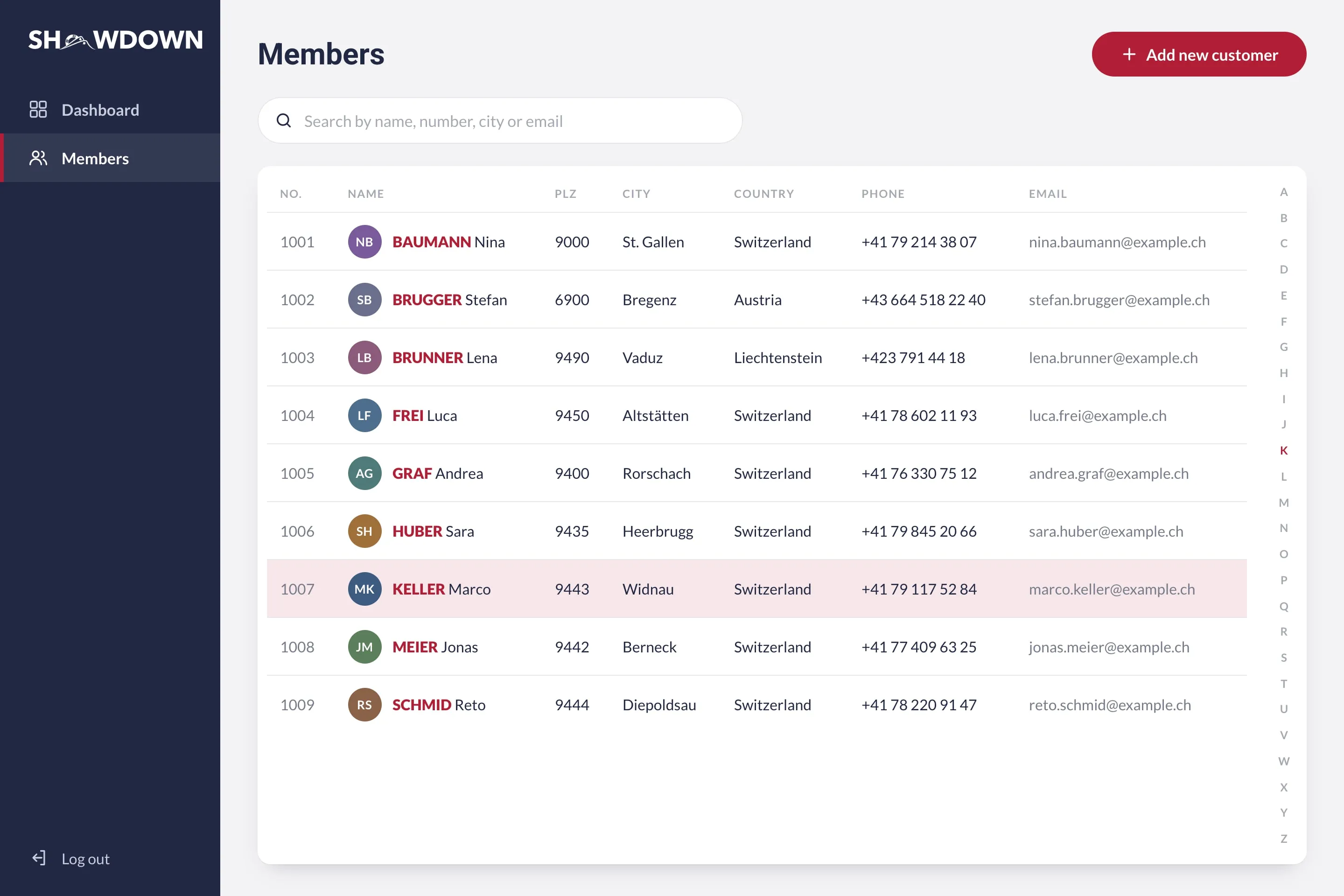
The member list, with search and an A to Z index as the brief asked. Also rebuilt from the brief. 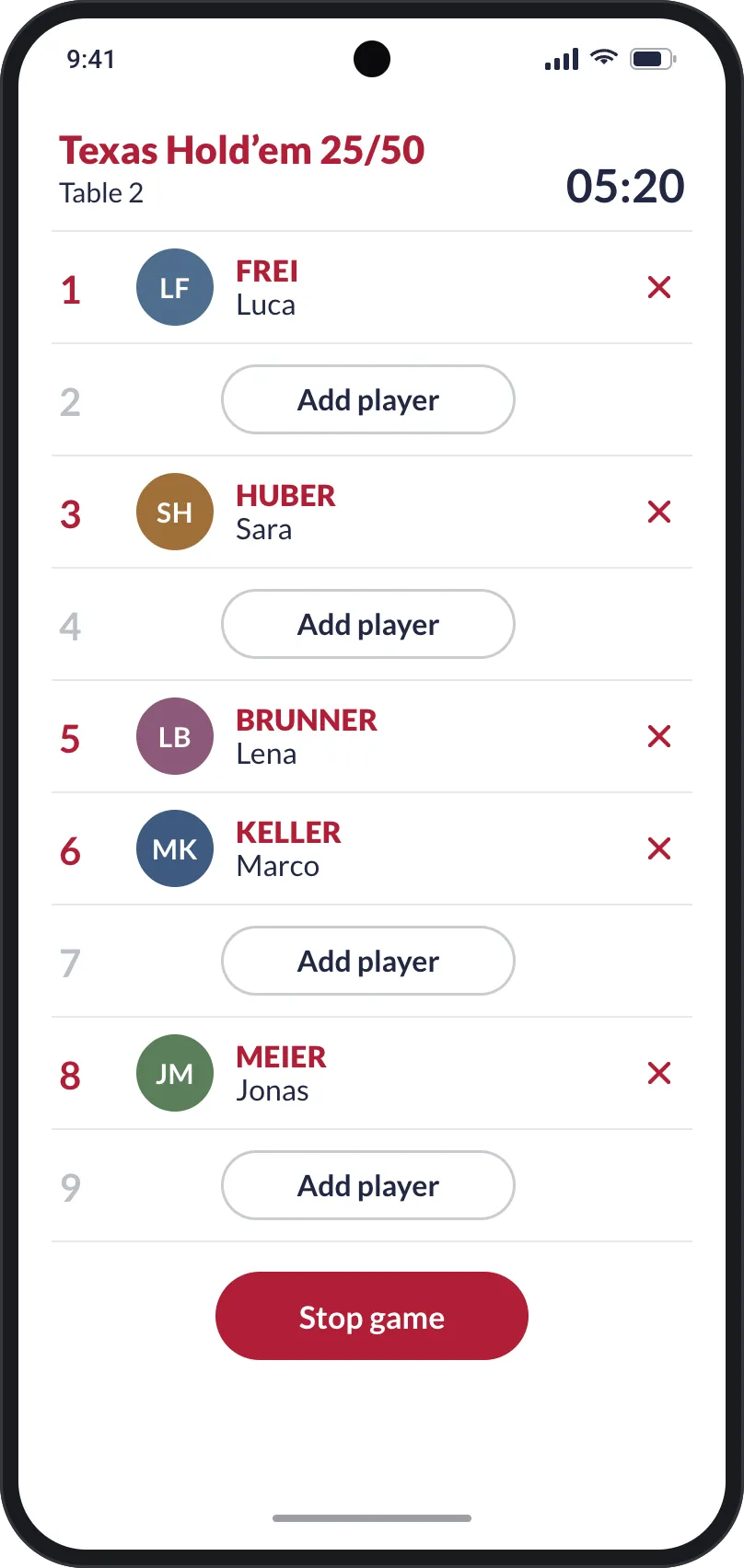
The running game: nine numbered seats, the same nine players reserve, under a timer. 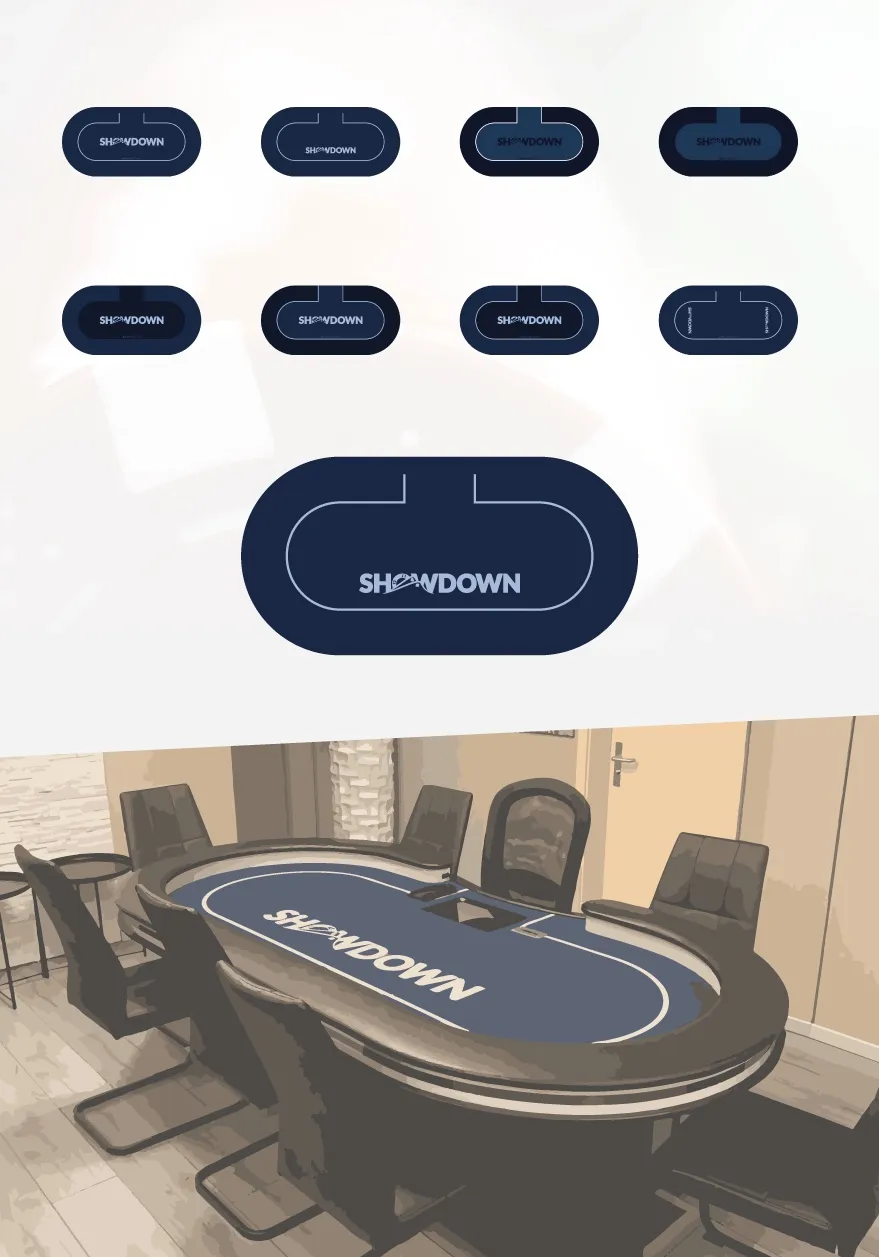
The felt, designed for the room before it was drawn in the app. 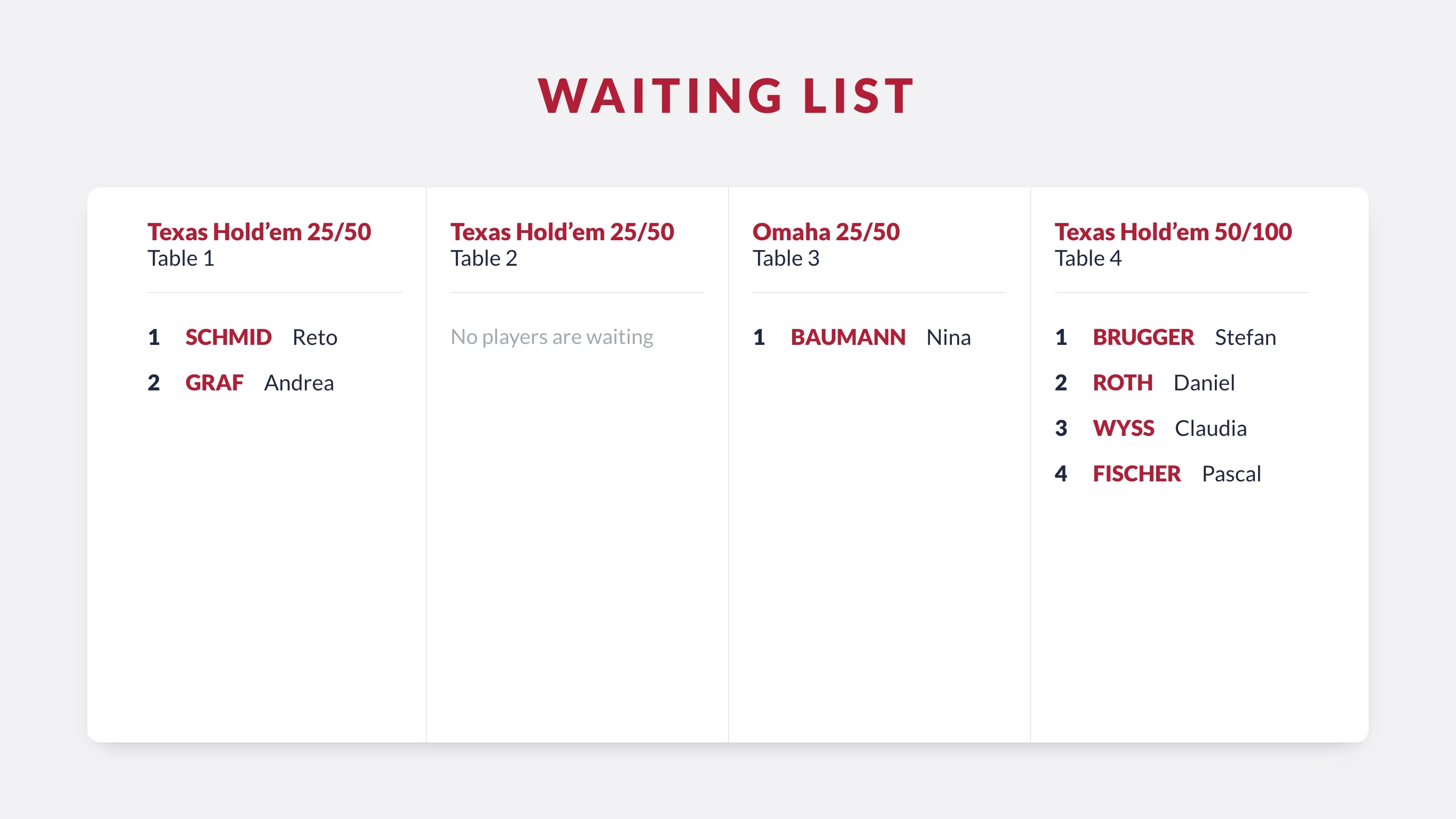
The waiting list on the wall. An empty table says so. 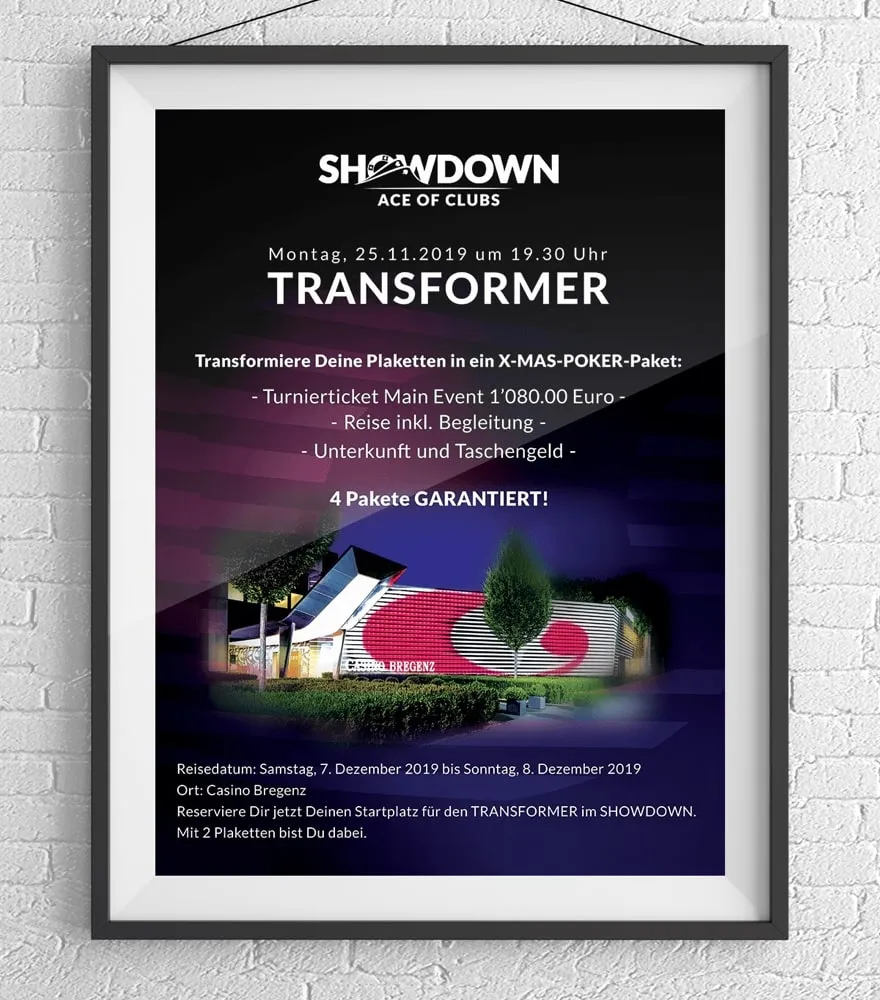
Where plaquettes end up. Two buy a Transformer entry.