Lighthouse
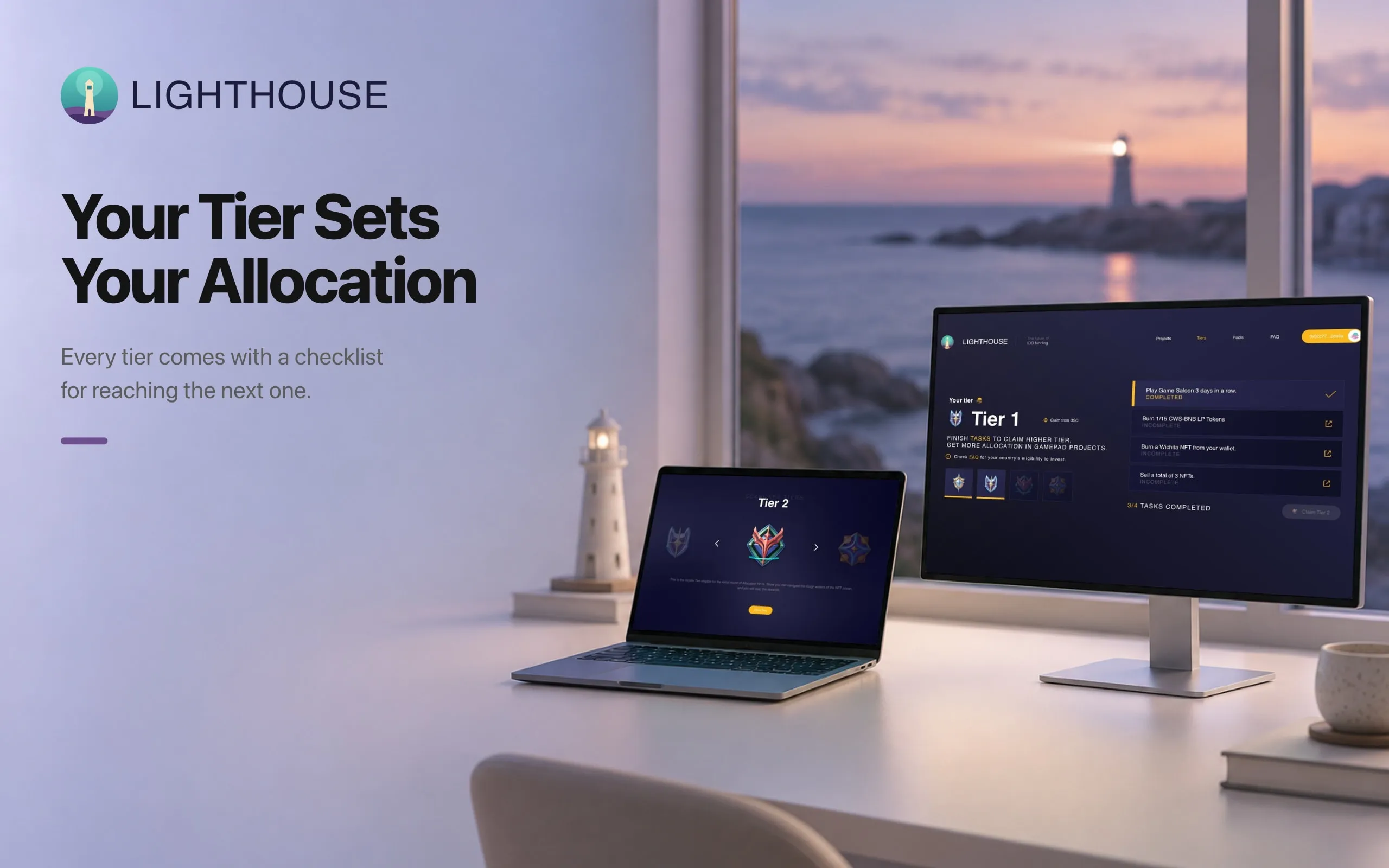
A launchpad where your tier sets your allocation, and the next tier is a checklist.
- Client
- SeaScape Network
- Role
- Head of Design, SeaScape Network
- Years
- 2021-2023
- Platforms
- Web app, desktop and mobile
- Scope
- Product design, branding
The situation
Lighthouse is SeaScape Network’s launchpad for token sales that fund indie game studios. The people investing were mostly players, not traders: they wanted early access to games they believed in.
How much someone can put into a launch depends on their tier, and tiers are earned by doing things in SeaScape’s games and markets. The rules behind that were precise, and written for people who already spoke DeFi.
As Head of Design at SeaScape I designed Lighthouse end to end, on desktop and mobile, while leading a team of three designers across SeaScape’s games.
The system behind it
- Data
- Tiers and their badges, the tasks that unlock each tier, projects and their sale phases, auction pools and bids, investments, earnings and vesting.
- Rules
- A tier sets an investor’s allocation in every launch. Each tier is earned through tasks such as playing a partner game three days in a row, burning LP tokens, or burning or selling NFTs. What a launch doesn’t allocate goes to an auction pool, where investors burn CWS to bid.
- People
- Players investing in studios they care about, game studios launching a project, and the SeaScape team running each sale.
Decisions
The next tier is a checklist
What brokeTier rules written as terms and conditions leave investors unsure what they have to do to qualify, so they don’t.
What I decidedThe tier page shows the current tier and its badge, then lists the tasks for the next one, each marked completed or incomplete with a link straight to where it’s done. The claim button stays greyed out until every task is complete.
The trade-offA checklist makes the tier feel like a game to complete, which suits players and can push people to do tasks just for the allocation.
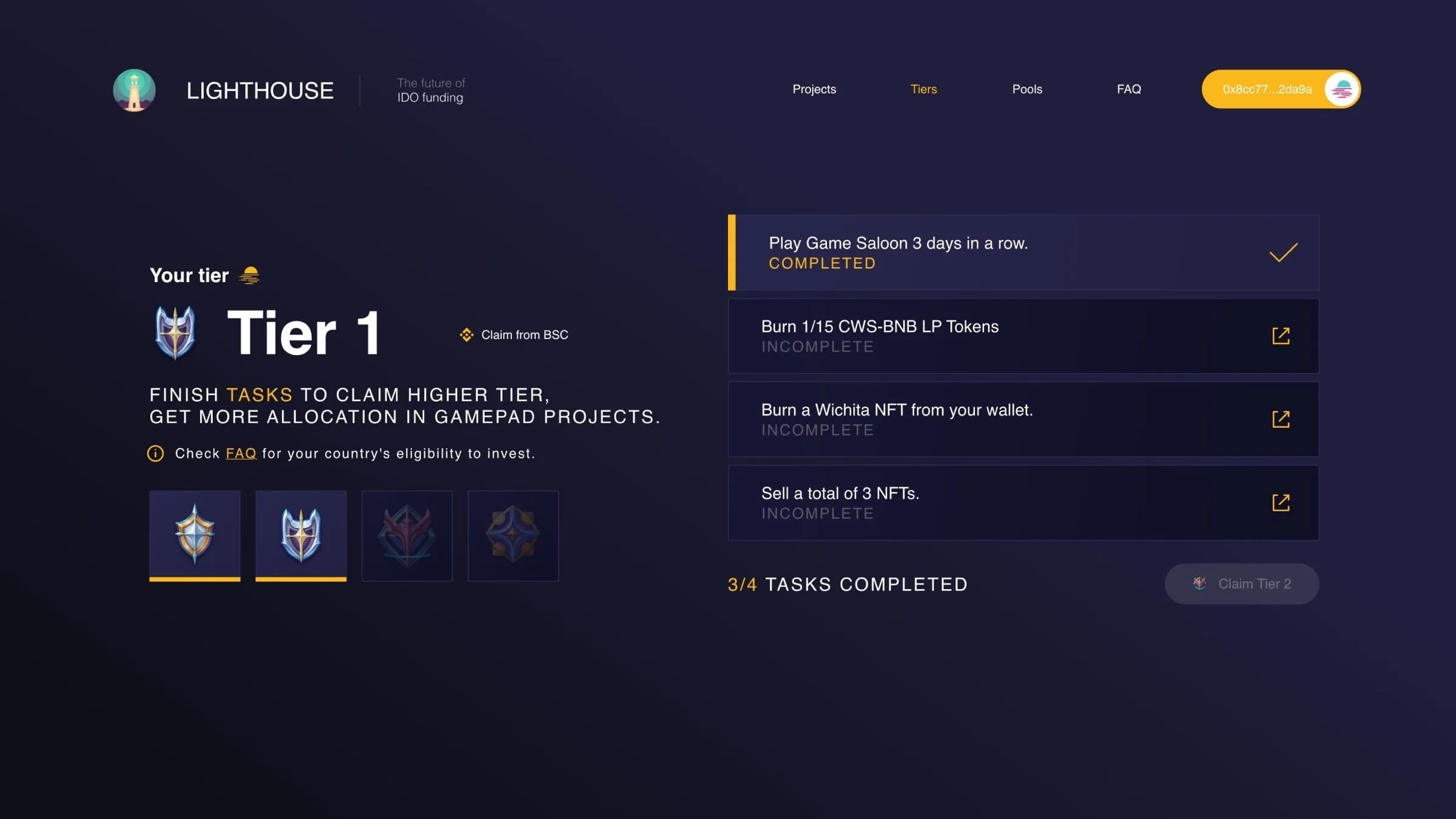
Each task links to where it’s done. The claim waits until all of them are. Every token in a launch accounted for
What brokeInvestors putting money into a new token want to know who else gets it, at what price, before they commit.
What I decidedEach project page has a funding panel that splits the whole supply in one list: how much goes to tier allocations and at what price, how much to the auction pool, to private and strategic investors, the SeaScape grant and the total raise, with the countdown to the phase above it.
The trade-offShowing that private investors bought cheaper than tier holders is honest, and it invites the obvious question. The panel answers it with numbers rather than hiding it.
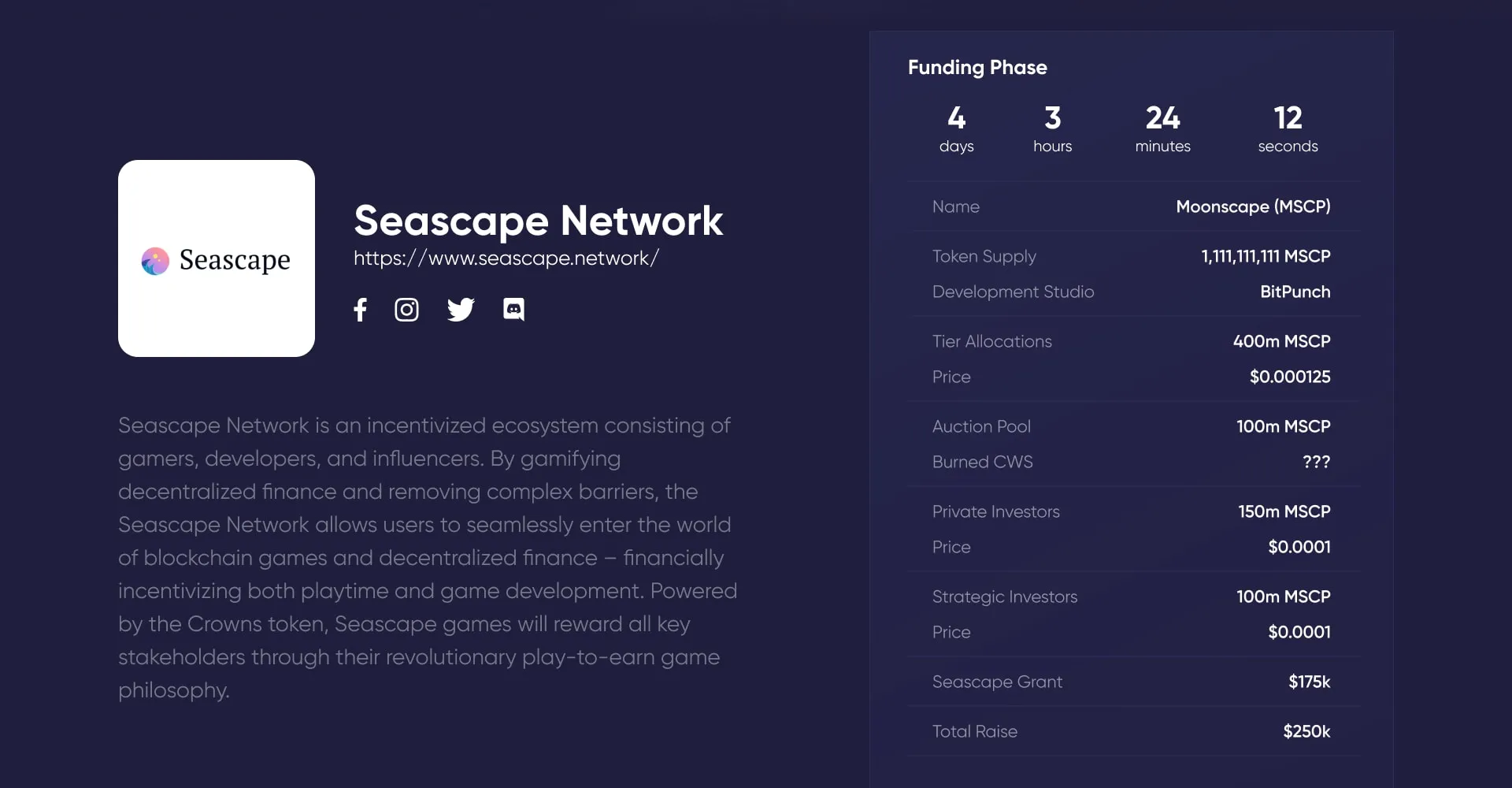
The Moonscape launch, split line by line before anyone commits. What’s left goes to auction, in the open
What brokeAllocation by tier leaves part of every sale unclaimed, and a hidden second round feels rigged.
What I decidedThe remainder of a launch goes to an auction pool with its own page: the total pool, the highest bid, a countdown and the full bidding history, with the minimum bid in the input.
The trade-offA countdown and a live bid list create urgency. That fits an auction, and it is pressure all the same.
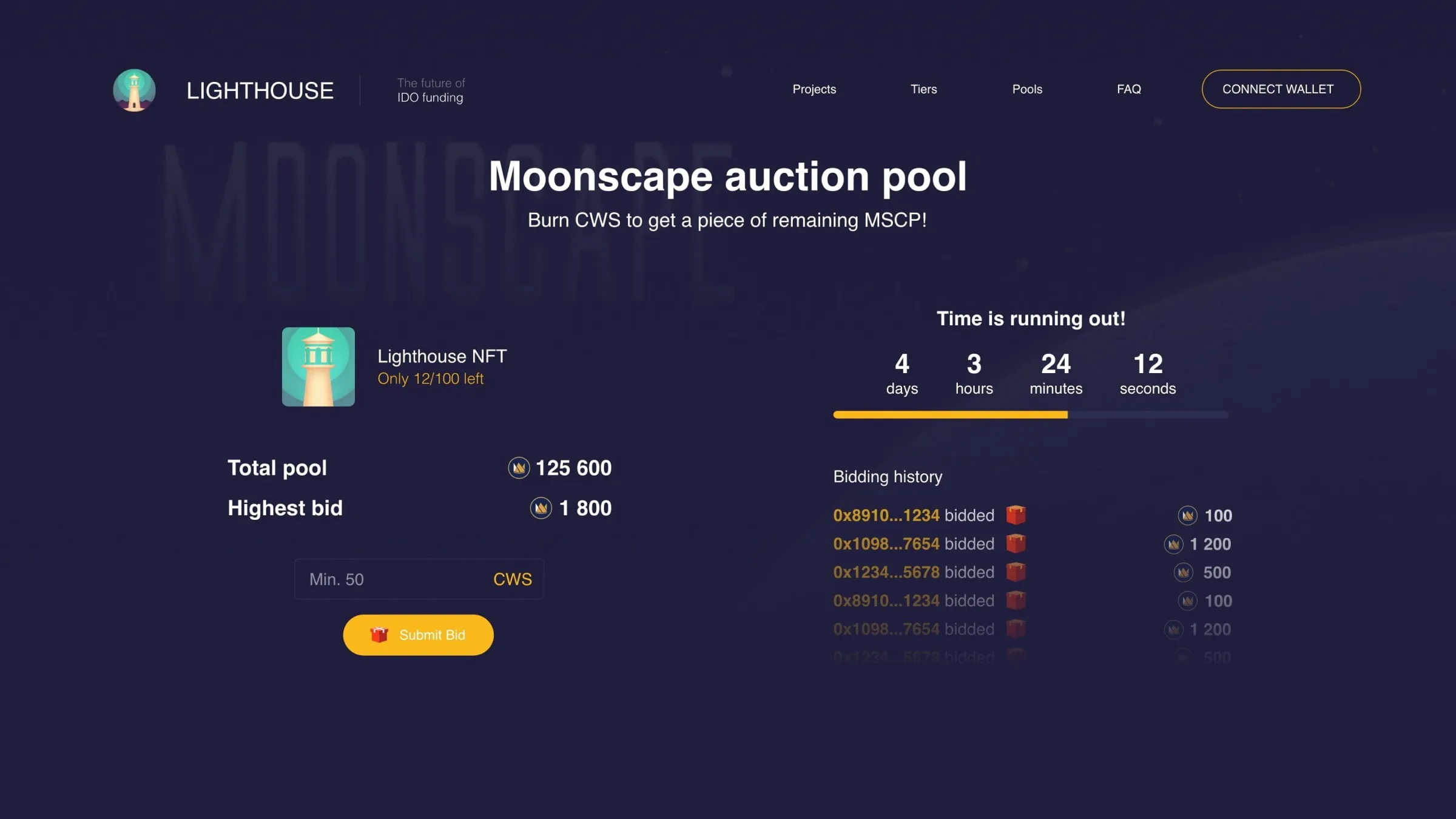
Every bid is visible, so the second round can be checked by anyone. Two audiences, split on the first screen
What brokeInvestors and studios come for opposite reasons, and one generic landing page serves neither.
What I decidedThe landing page gives each audience its own path from the first screen: invest, or launch a project.
The trade-offStudios are the smaller audience and get the secondary button, so a studio skimming the page can miss its way in.
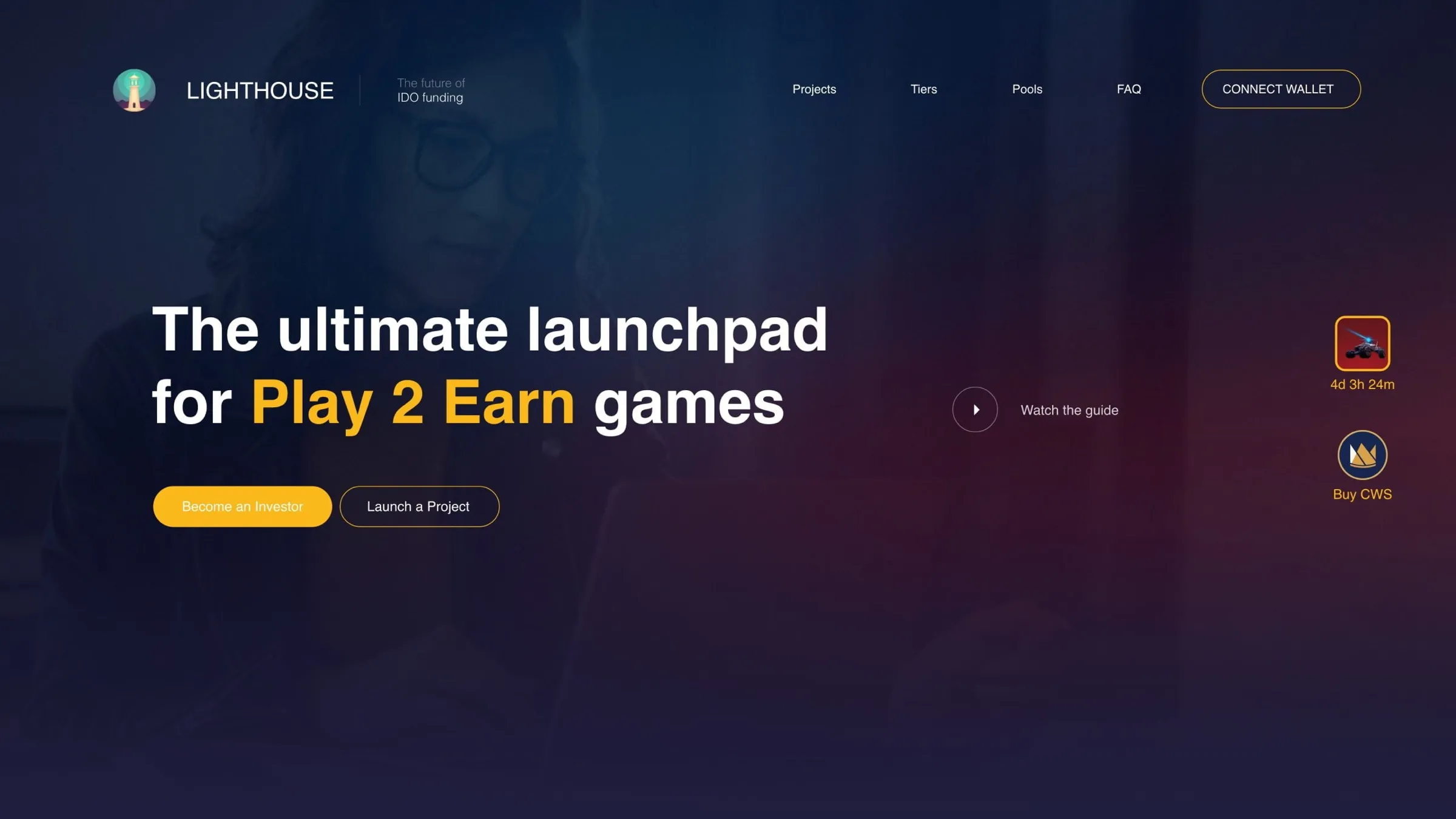
Investors and studios get separate paths from the first screen.
What changed
Lighthouse launched and ran the Moonscape token offering.
First-time staking completion rose by 22%.
My part
I was Head of Design at SeaScape Network from 2021 to 2023 and led a team of three designers. I designed Lighthouse myself, on desktop and mobile.
I owned the design system shared across SeaScape’s products and the design roadmap, which tied design work to development and SeaScape’s long-term plans.
More screens
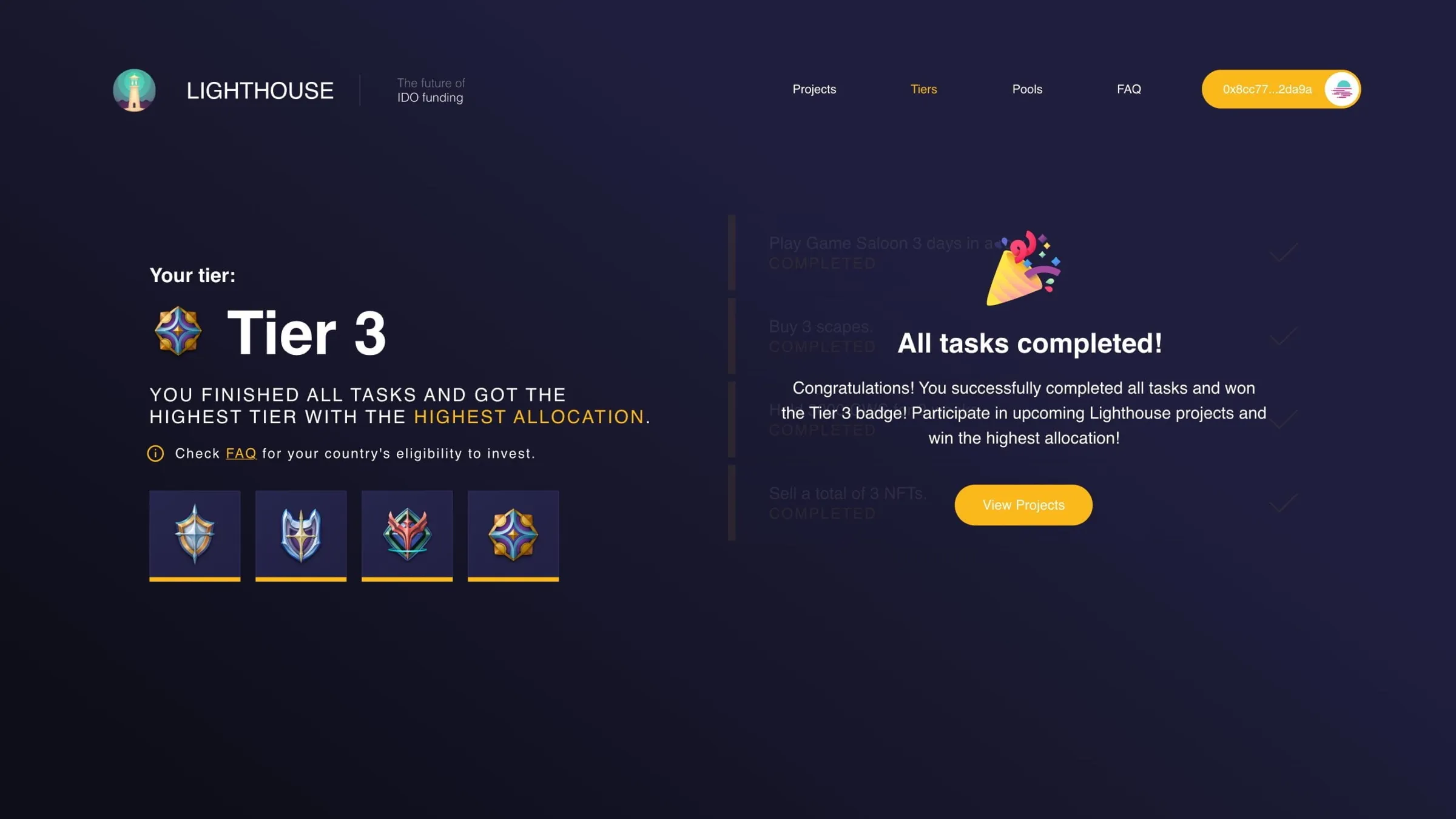
All tasks done: the top tier and the largest allocation. 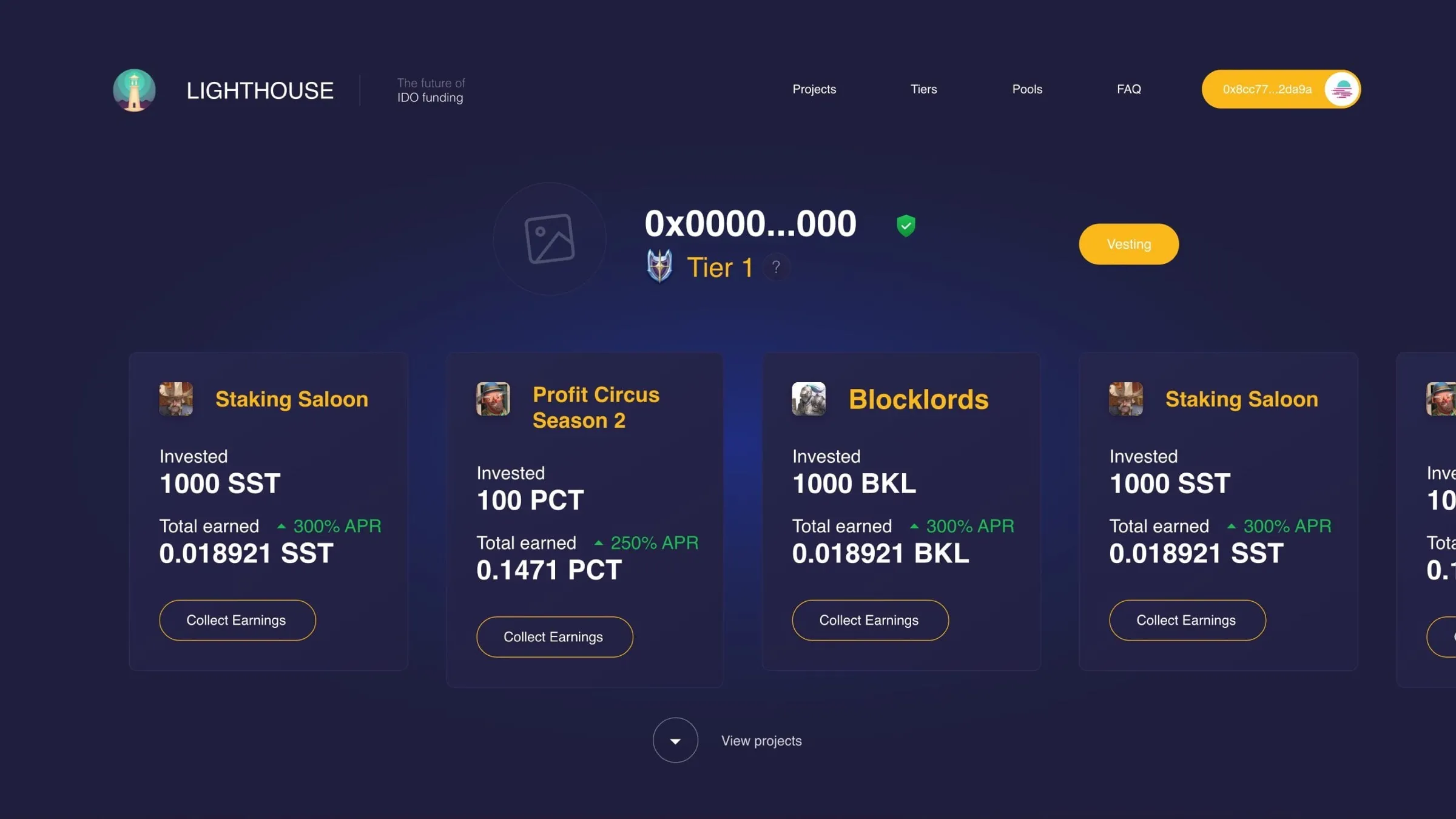
One card per project: invested, earned, and collect. 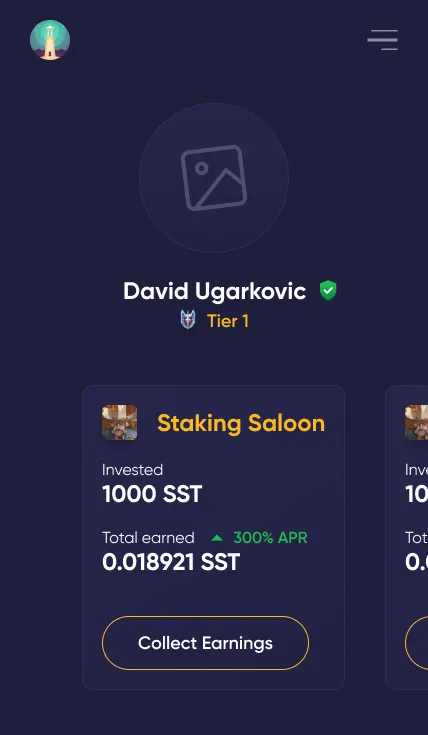
Mobile: the profile and its earnings, one card per project. 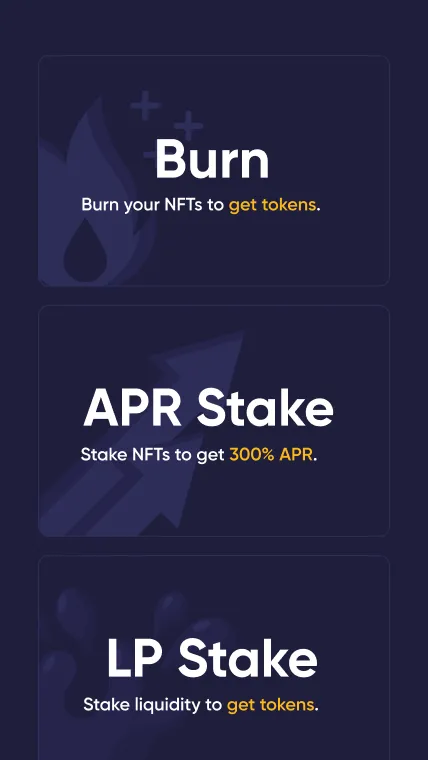
Mobile: the three ways to earn in a pool, one card each. 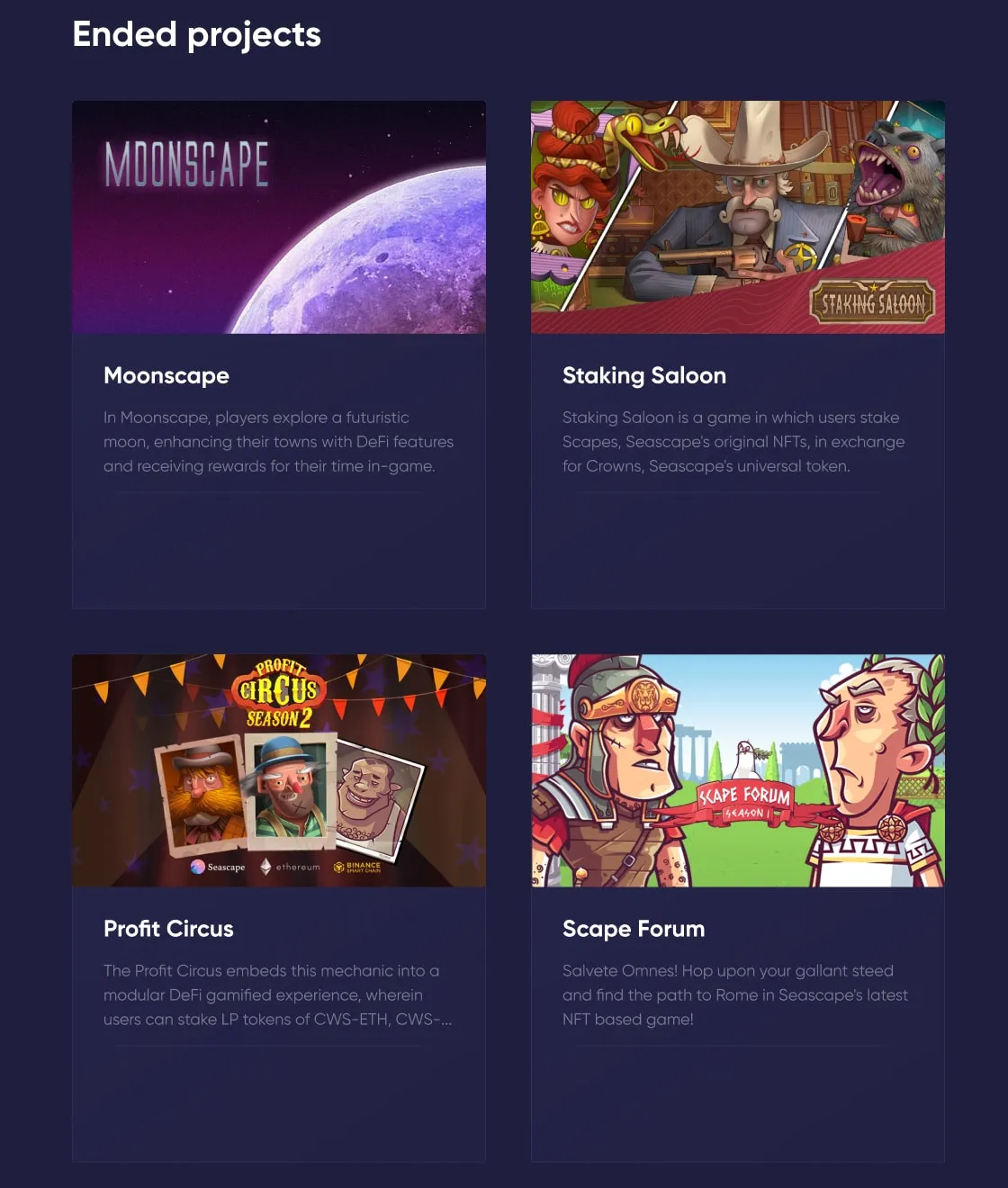
Launches that ran on Lighthouse. 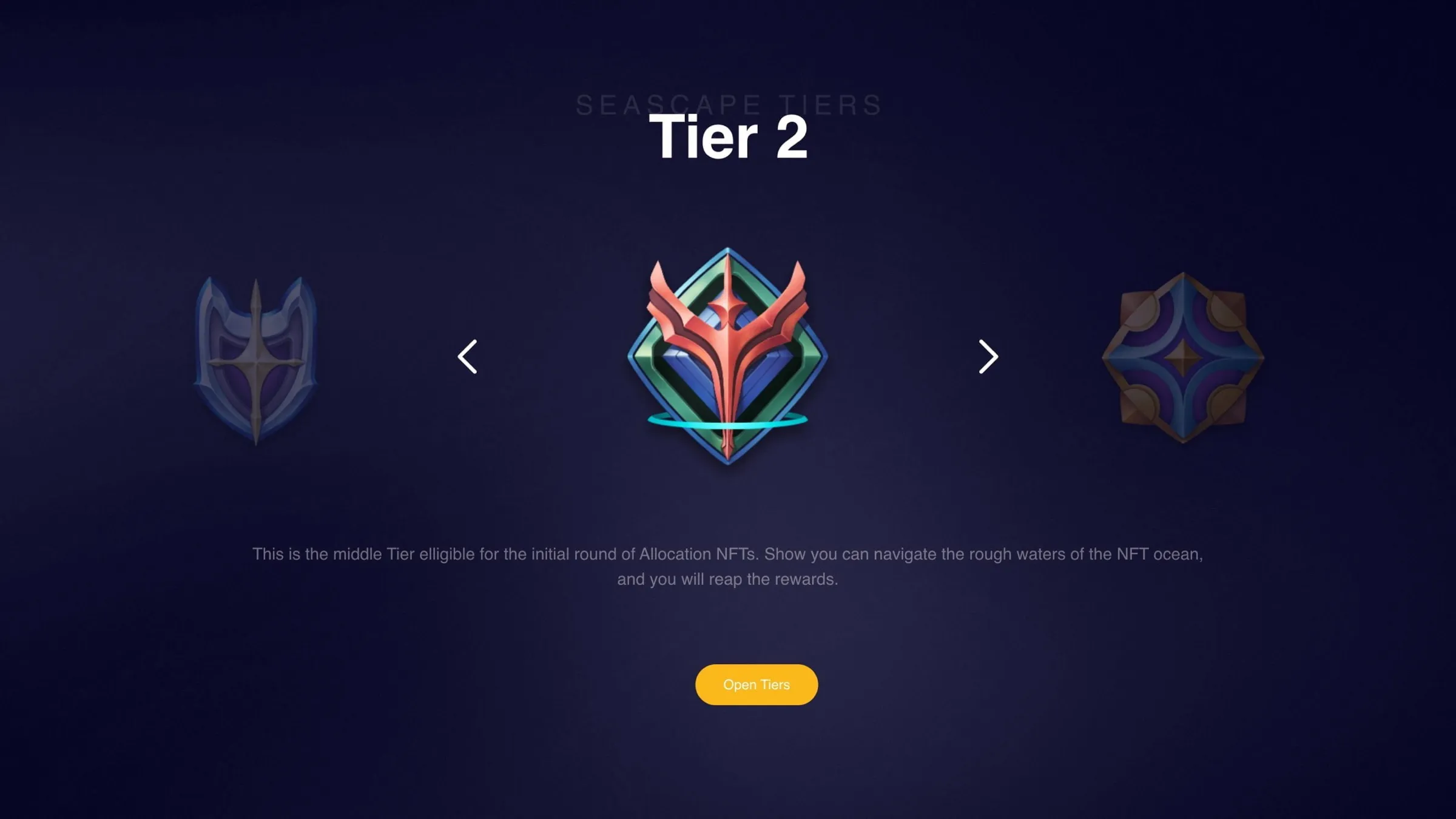
Browsing tiers one at a time, each badge with what it qualifies for.