


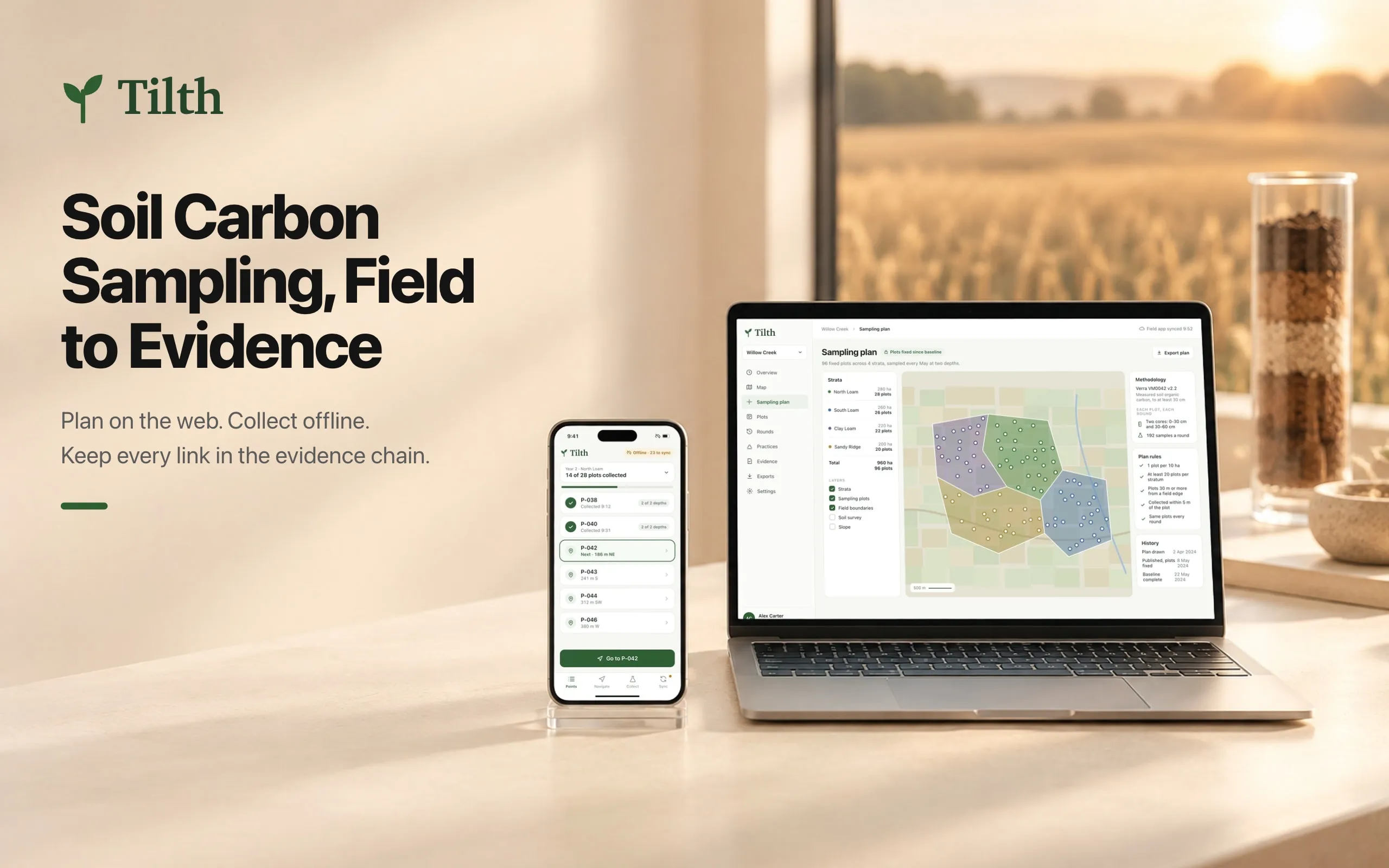
Hazel
Food-safety checks that log at the line and leave an audit trail by themselves.
- Platforms
- Rugged tablet at each control point, web app
- Scope
- Product design
The situation
A food plant runs on its HACCP plan. Each critical control point, such as cook temperature, chill time, metal detection, label checks or seal integrity, has a critical limit and a check schedule. Every check is a record, and certification schemes like BRCGS, SQF and FSSC 22000 audit those records.
When checks go on paper, or get filled in at the end of a shift, the record stops matching what happened on the line. A missed check stays hidden until someone reads the binder.
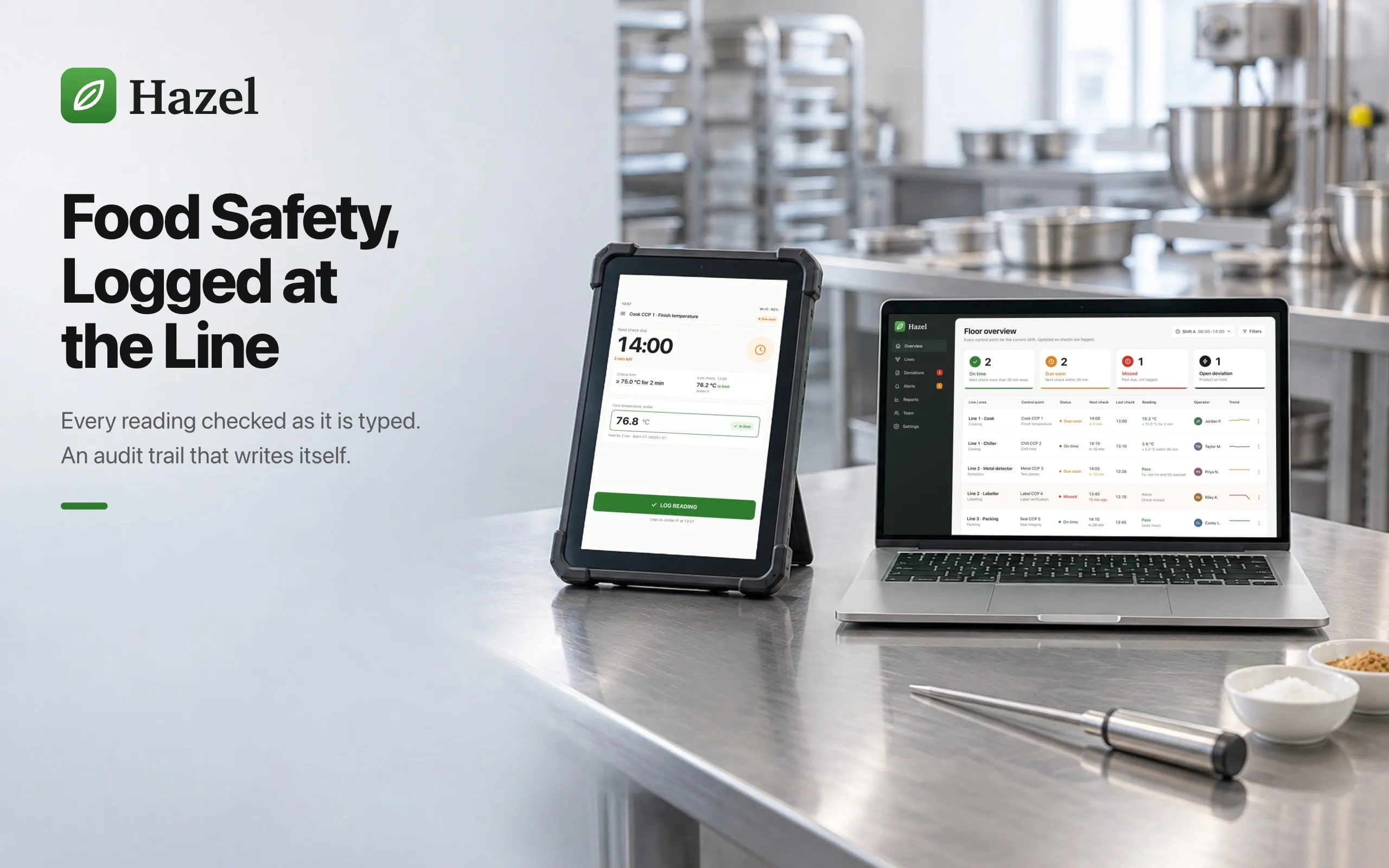
Hazel puts each check on a tablet at its control point and makes every reading, deviation and fix part of one record an auditor can follow.
The system behind it
- Data
- Control points, critical limits, check schedules, readings, deviations, corrective actions, product holds and dispositions, sign-offs, and the clauses of each certification scheme.
- Rules
- Every check has a schedule and a limit. A reading outside the limit starts a corrective action. Every action needs a person, a time and a sign-off, and every deviation traces back to the reading that caused it.
- People
- Line operators who log checks between other jobs, supervisors who handle misses and failures, quality managers who set up the plan, and the auditor who reads the record months later.
Decisions
The honest path is the easy path
What brokeIf logging a correct reading takes longer than skipping it, checks get skipped or written up later from memory.
What I decidedThe tablet at each control point leads with the next check due, as a large time with the minutes left. Below it sit the critical limit and the last reading. The reading is checked against the limit as it is typed, and an in-limit reading logs with one press.
The trade-offThe easier logging gets, the easier it is to log without measuring. The button does nothing until a reading is entered, so the shortcut skips the confirmation, never the measurement.
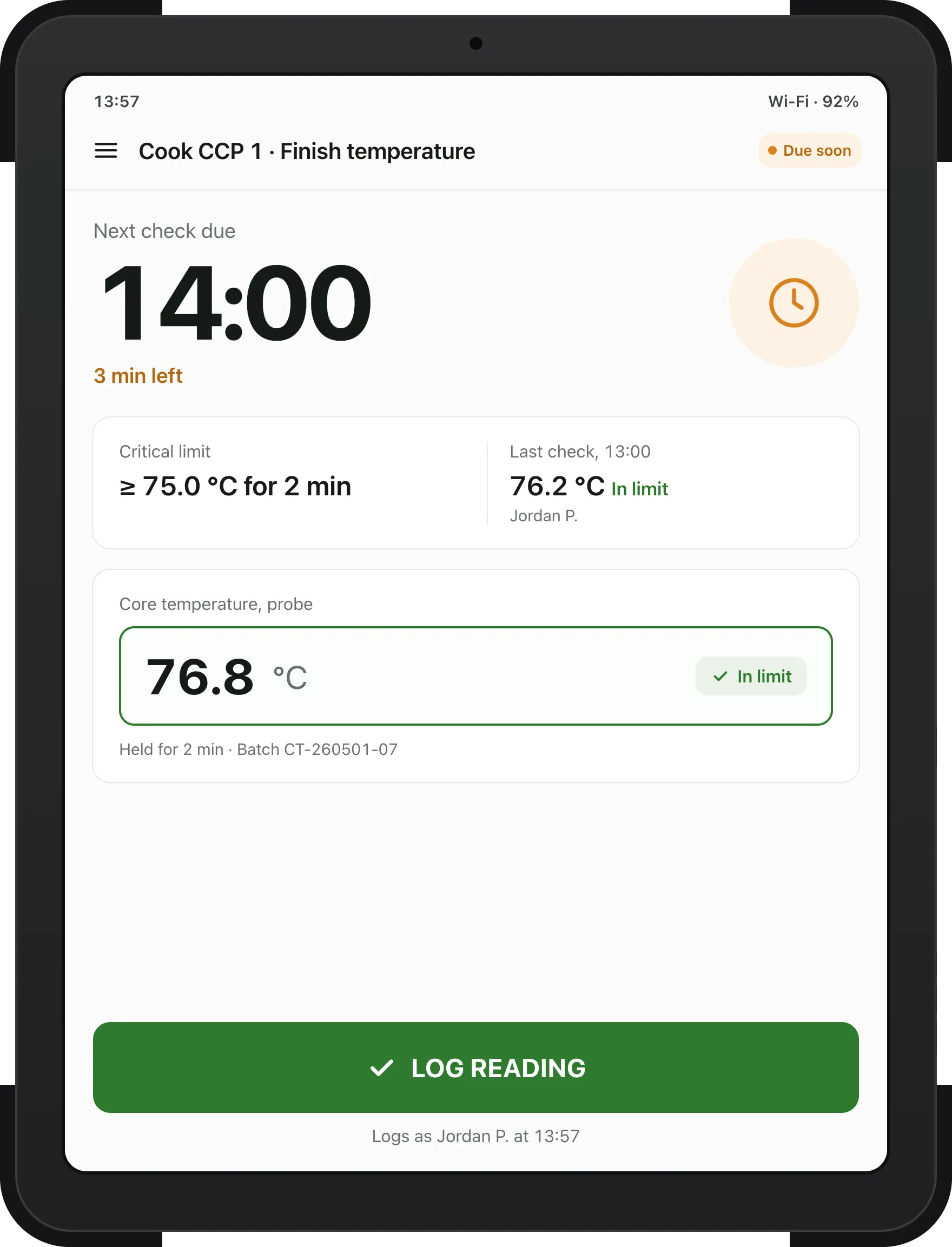
Next check, limit, last reading, then the reading itself, checked as it is typed. An out-of-limit reading starts the fix
What brokeA failed reading on paper depends on someone remembering to hold the product and tell the supervisor.
What I decidedA reading below the limit turns the tablet red and opens the corrective action plan for that control point: hold the product, notify the supervisor, recheck, record the action, then the disposition. Each step is saved with a time and a name as it is done, all on one deviation record.
The trade-offThe worst minute of the shift gets a five-step form. The steps run in order, which keeps the record honest and slows down anyone who already knows what to do.
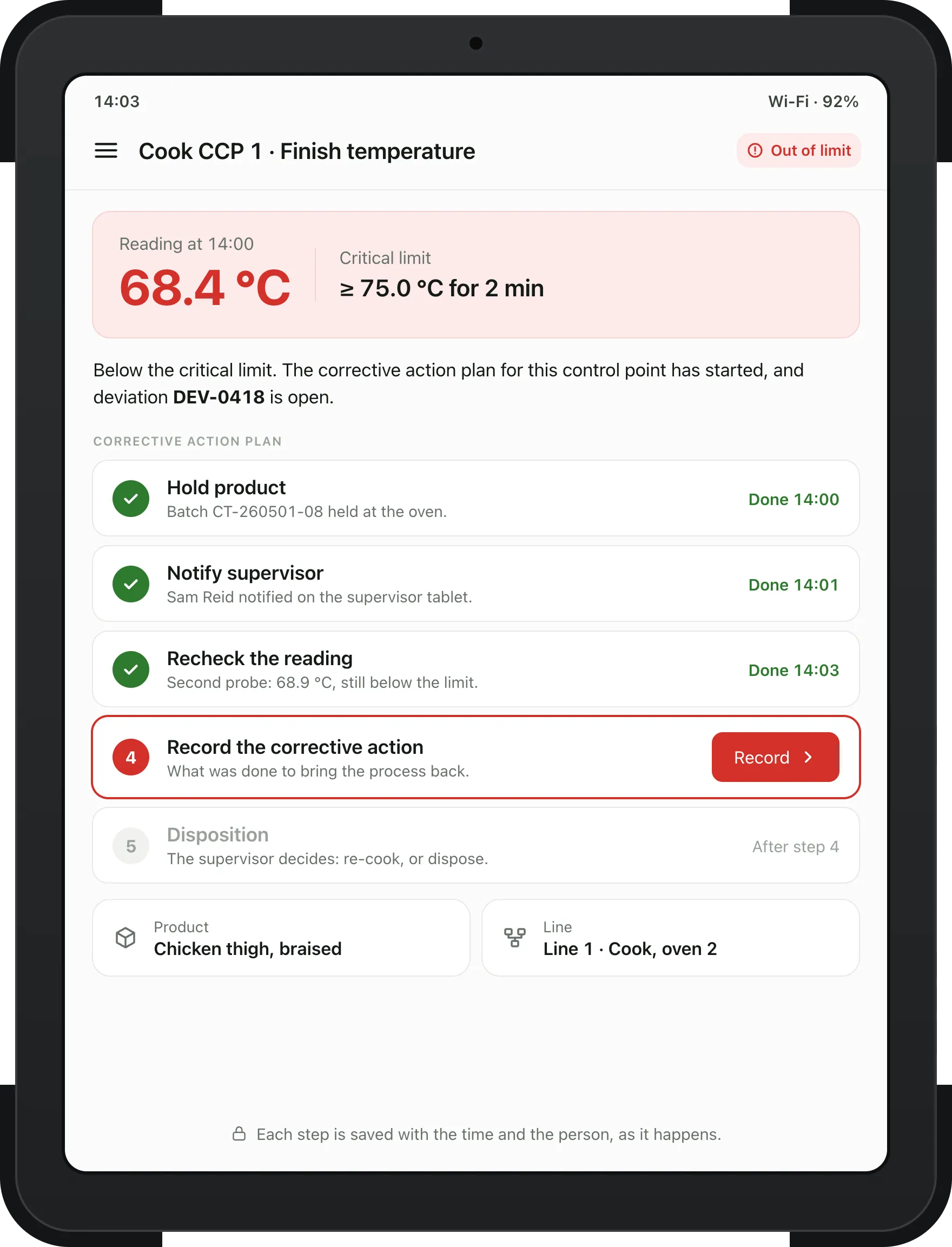
The deviation record is created from the reading, not filled in afterwards. Reassign first, not blame
What brokeA missed check usually means a busy operator. Treat it as a fault and people learn to hide misses or fake the entry.
What I decidedA missed check alerts the operator, then the supervisor, who hands it to someone free with a new due time and a note. The miss stays on the record, and the timeline shows who was told and when.
The trade-offReassigning keeps the check alive but can hide a pattern of misses on one line. Every miss stays in the timeline, so the pattern shows up in the audit gap report.
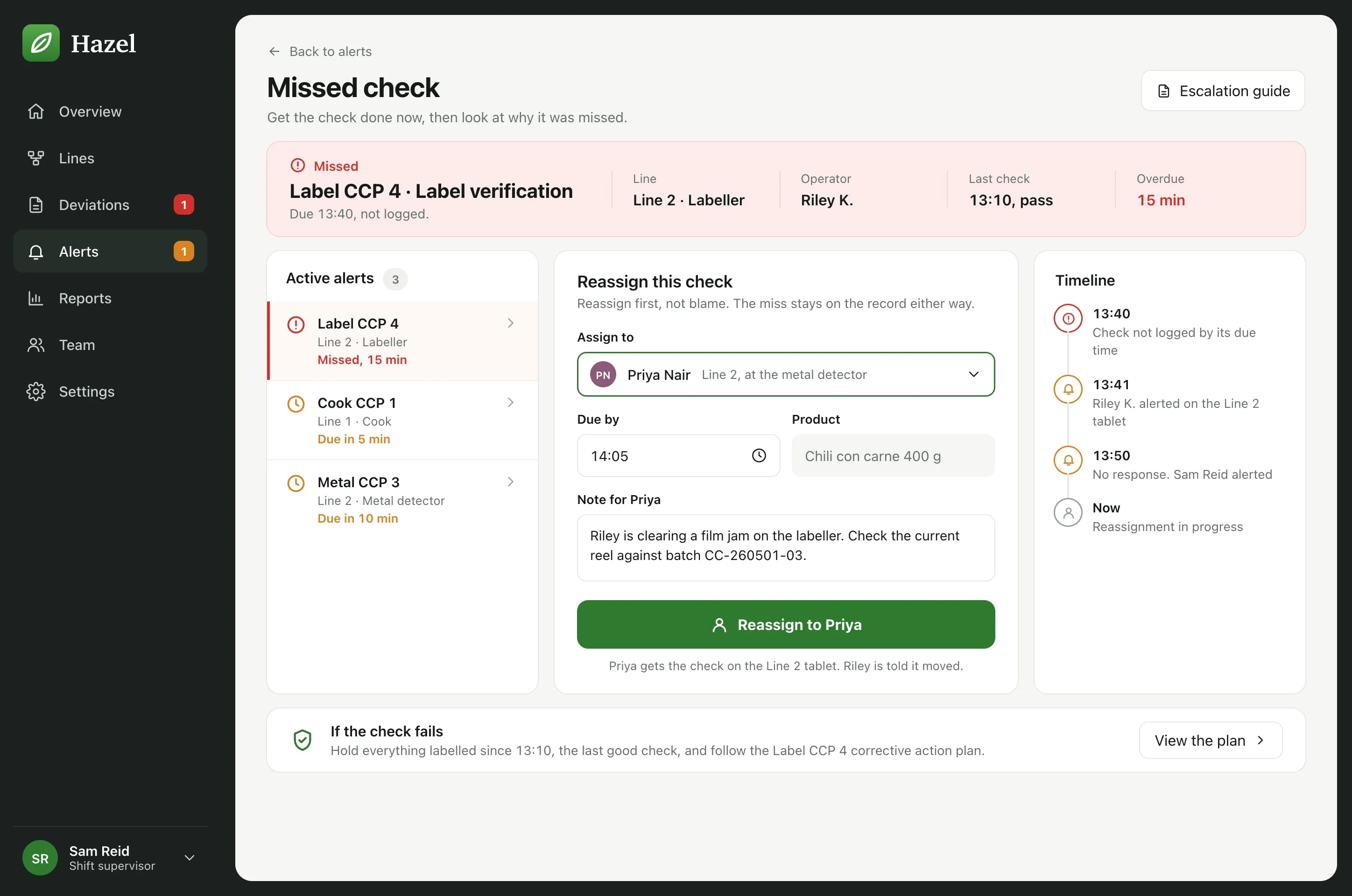
The first question is who can do the check now, not who missed it. One record, three audit formats
What brokeBRCGS, SQF and FSSC 22000 ask for much the same evidence, organised differently. Preparing for each means pulling the records together again.
What I decidedThe HACCP plan maps each control point to the clauses of the schemes the plant is audited against. Audit readiness then asks for a scheme, a period and a site, and builds one evidence package in that scheme’s order, with a report of the gaps an auditor will ask about.
The trade-offSomeone has to keep the clause mapping current each time a scheme publishes a new edition.
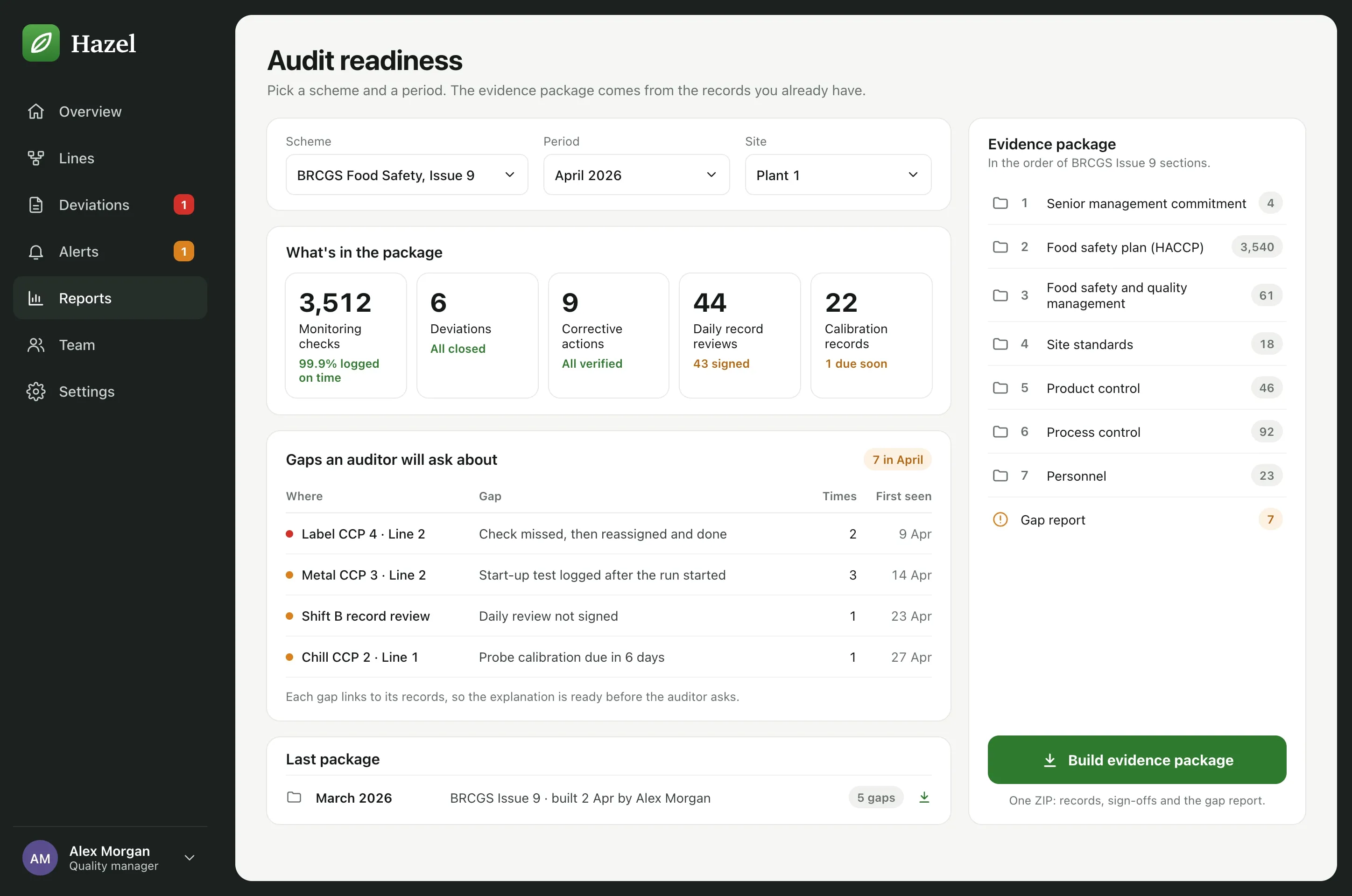
The package and its gaps come from records that already exist.
What I’d test first
Whether a fixed tablet can live at each control point. Washdown and hygiene rules decide where a screen can go, and gloves decide how big a button has to be.
How long a check really takes on a busy line. If one press is still slower than a pen, the record will drift again.
Whether a quality manager trusts the clause mapping enough to hand the package to an auditor as it is.
My part
I designed Hazel on my own, in Figma: the structure of the HACCP plan, the floor and tablet screens, and the audit package.
More screens
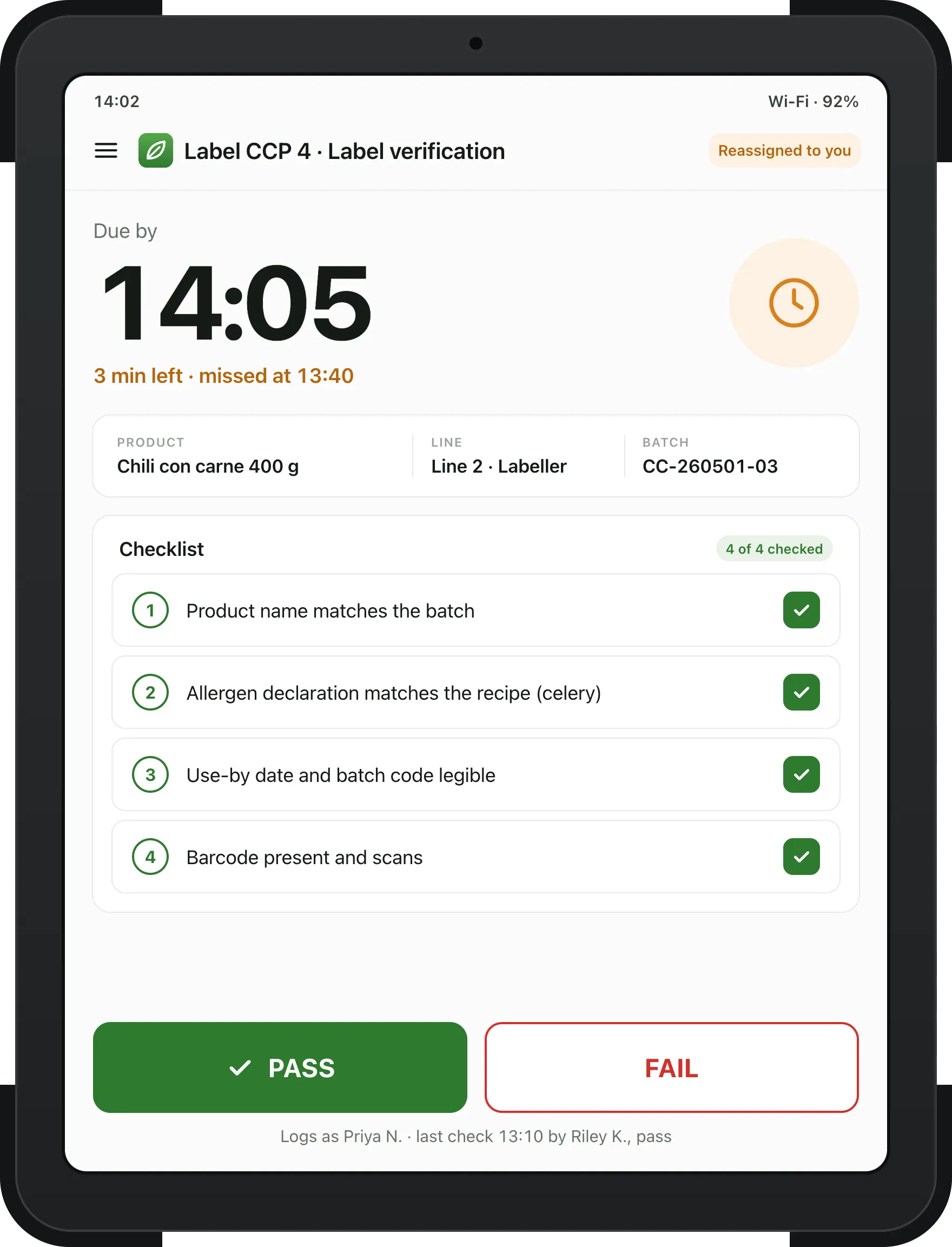
Not every check is a number. Label verification is four items, then pass or fail. 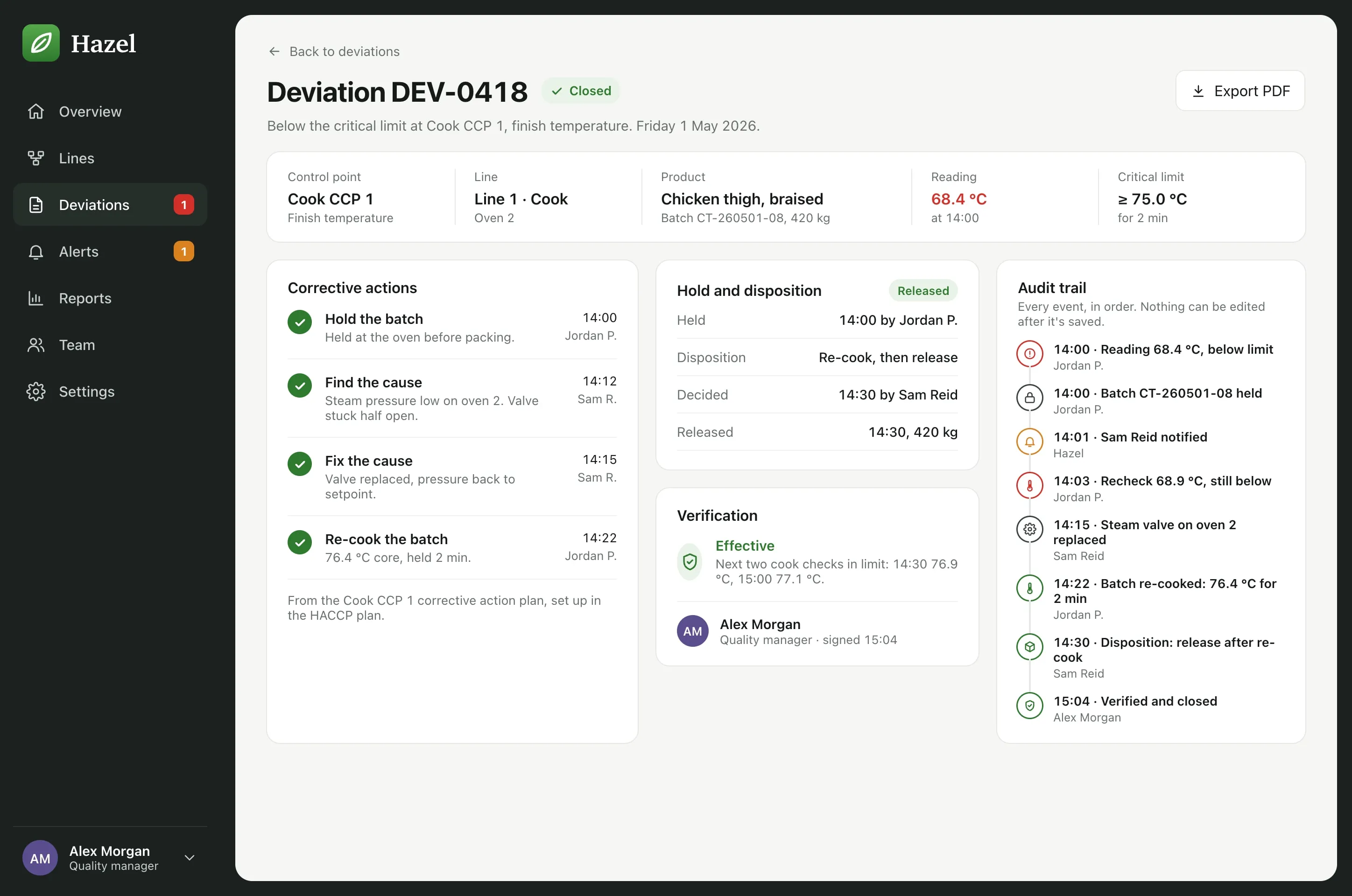
Everything about one deviation on one page, in the order an auditor reads it. 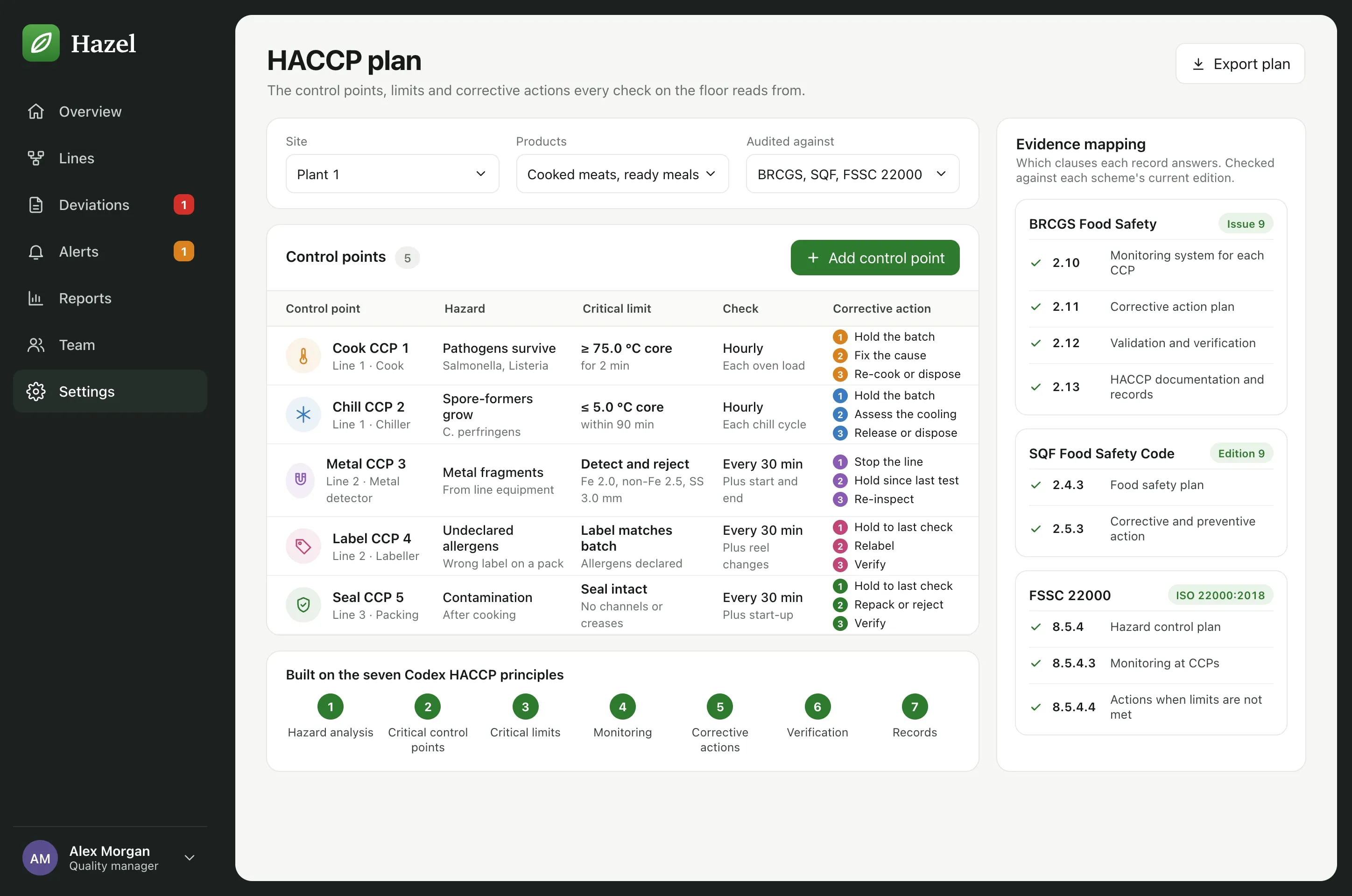
The plan comes first. Every screen on the floor reads from it.