Blocklords
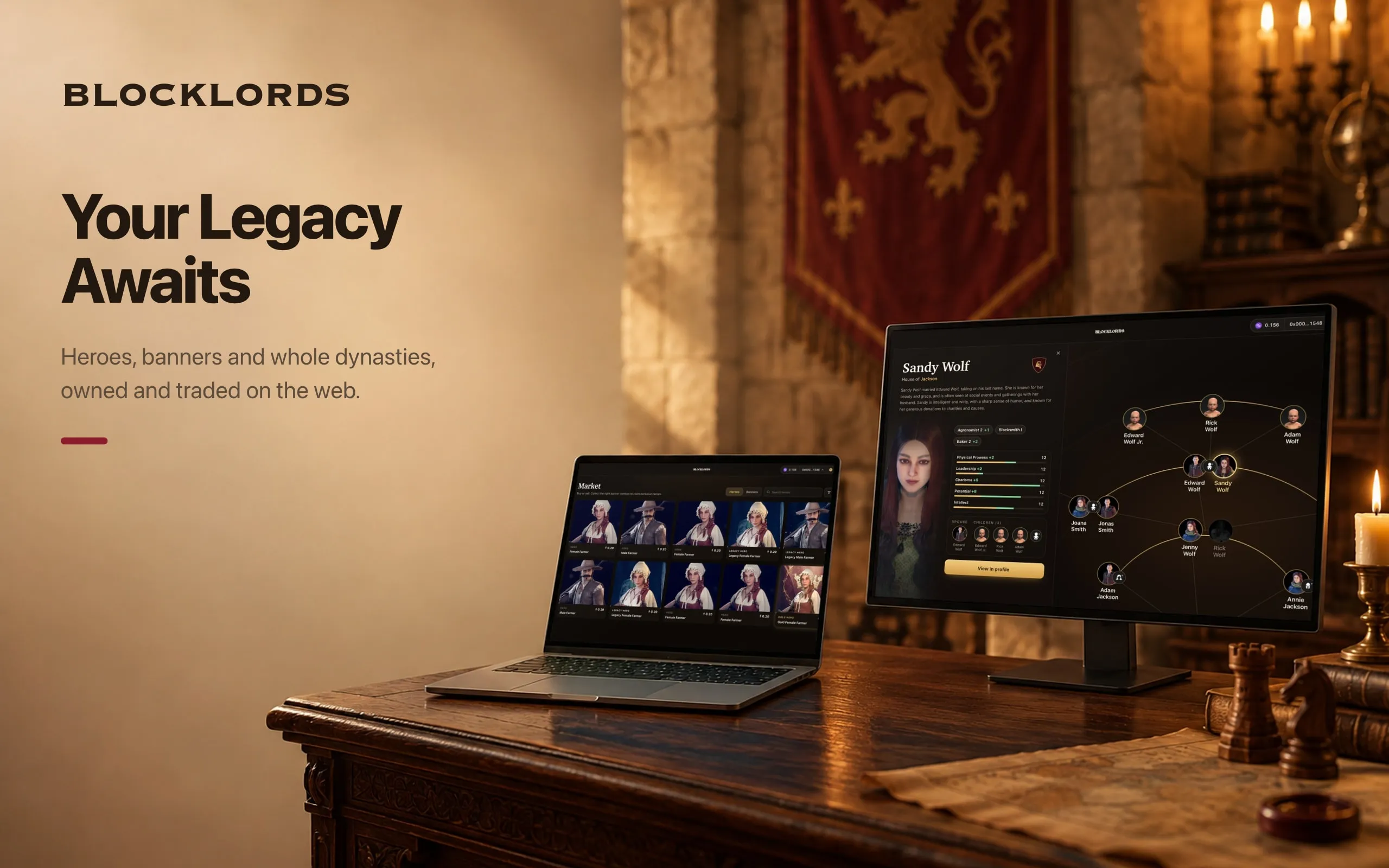
The web side of a medieval strategy game, where heroes, banners and whole dynasties are assets players own and trade.
- Client
- MetaKing Studios
- Role
- Head of Design, SeaScape Network
- Years
- 2021-2023
- Platforms
- Web app
- Scope
- Product design
The situation
Blocklords is a player-driven medieval grand strategy game by MetaKing Studios, played in a client on the Epic Games Store. The web portal is where players manage what they own. Heroes move between a player’s wallet and the game, and on the web they are bought, sold, staked and married.
A lot of economy sits behind those screens. Banners stand for the game’s 60 houses and come in basic, silver and gold. They arrive in chests, trade in the market, burn for points in timed events and, in the right combinations, claim exclusive heroes. Heroes come in basic, legacy and gold versions on two chains, IMX and Polygon. On one visit a player can pay in ETH, spend a token called $ALE on a marriage and earn pheasants at a feast.
The design problem is making that economy readable without losing the game’s dark, theatrical look.
The system behind it
- Data
- Wallets and balances, heroes with stats, professions and families, banners from 60 houses in three qualities, chests, market listings on two chains, alliances with their districts, and event scores.
- Rules
- The right banner combinations claim heroes, silver chests open by burning legacy heroes, a marriage costs $ALE, banners burn into pheasants at a fixed rate, and alliances contest districts in timed turns.
- People
- Players running a hero’s family, collectors chasing a banner combination, traders in the market, and alliance members acting together on the map.
Decisions
What you own, in one place
What brokeAlmost every page in the portal can spend something. A player who loses sight of their balance, or of what they already own, is one click from a surprise.
What I decidedOne shell frames the portal: balance and wallet address sit in the top bar on every page, beside an icon rail for the portal’s areas. The account page gathers the rest: wallet, balance in ETH with its dollar value, inventory by type and alliance status. It also marks which heroes are on sale and has one action to import heroes into the game.
The trade-offThe rail’s eleven icons have no labels. Art-heavy pages keep almost the full width, but a few icons, such as the pheasant, only make sense once you know the game.
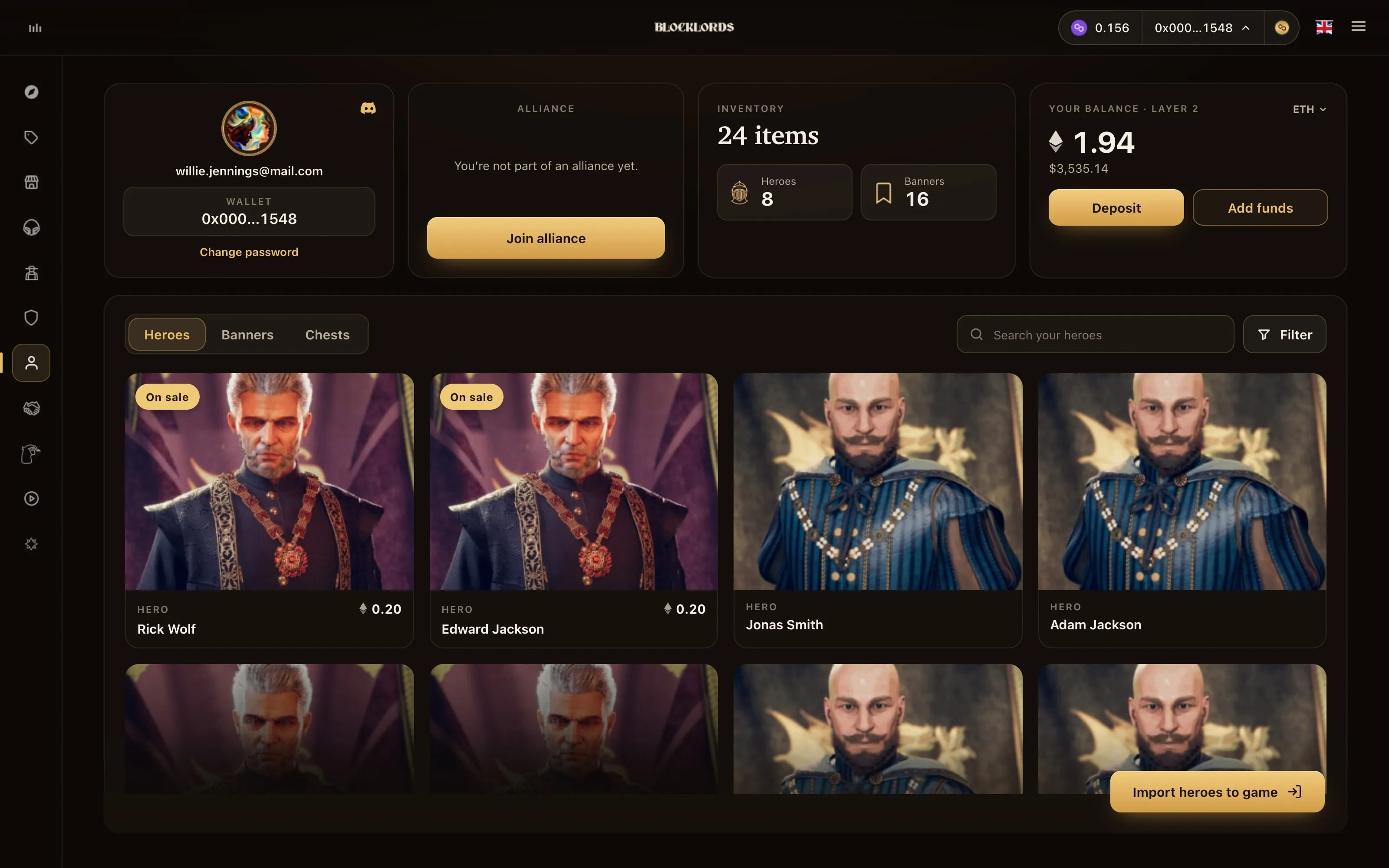
The account page: wallet, balance with its dollar value, inventory and alliance status. Heroes on sale are marked, and one button imports heroes into the game. A family tree you can act on
What brokeA dynasty is a family that marries, has children and passes on traits. Shown as a list or a form, the relationships that every action depends on disappear.
What I decidedEach house is drawn as a radial tree, one generation per arc. The actions sit on the nodes: a badge between a couple adds a child, and a badge on an unmarried hero starts a marriage. Selecting anyone swaps the house panel for their profile and lights their node in gold, so panel and tree always point at the same person.
The trade-offArcs read well at three or four generations. A large house with many children per couple will crowd the outer arcs, which is where collapsing branches or zoom would come in.
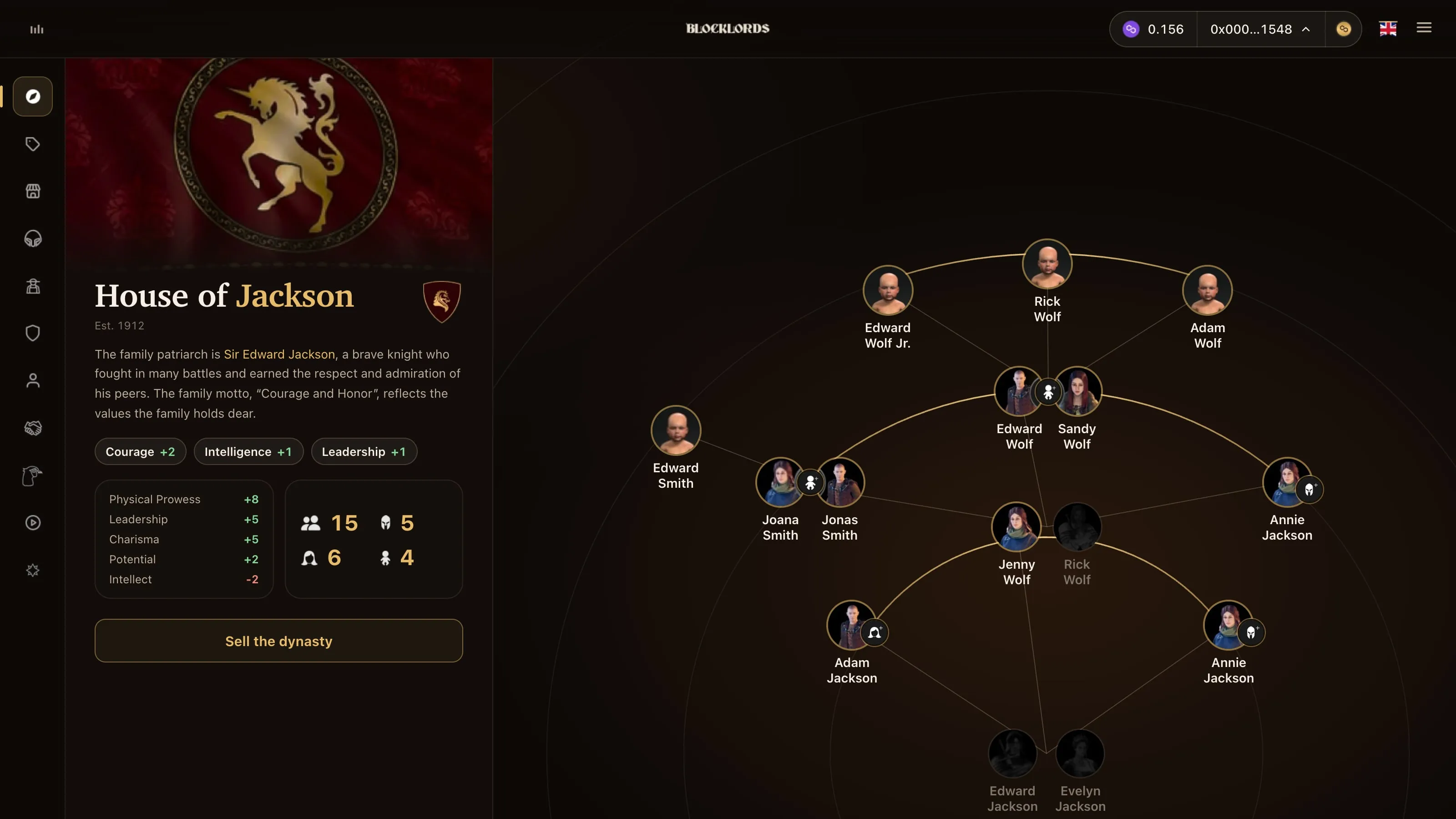
House level: crest, story, house traits and totals beside the tree. The small badges on the nodes are the actions. The price before the commit
What brokeWith ETH, $ALE and pheasants all in play, a cost that shows up only after the click is the quickest way to lose a player’s trust.
What I decidedEvery action that spends value states its price first, in the currency it uses. The marriage modal shows the cost beside the token icon and again in the sentence above the buttons. The Feast prints its exchange rate (a white banner for 1 pheasant, a blue one for 10) right under its main button. The store shows ETH with a dollar figure beside it, and each banner chest says what it holds and what it takes to open before anyone claims it.
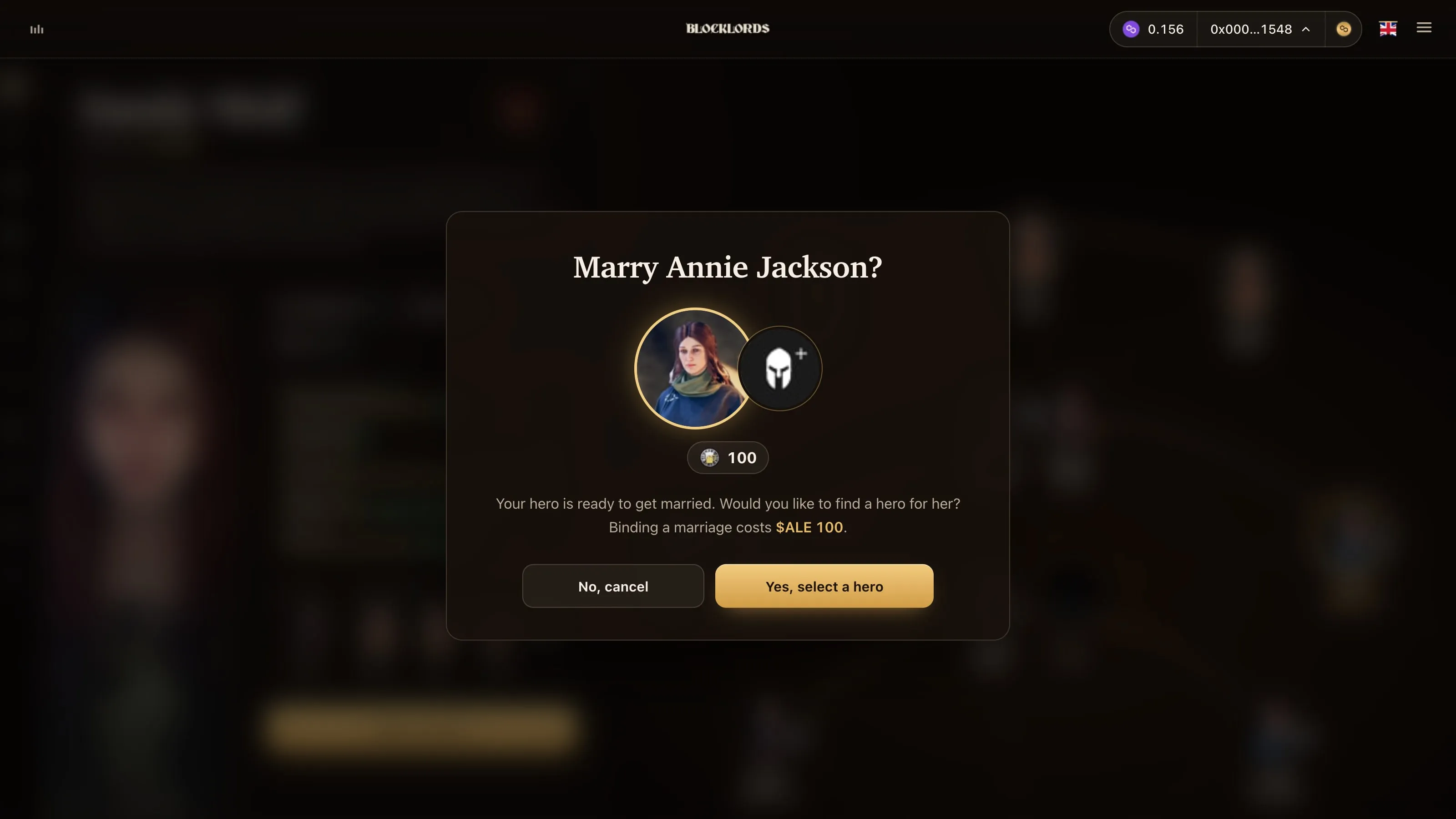
The marriage confirmation names the hero, shows the empty slot it will fill and the cost, then hands off to choosing a partner. One card for every collection
What brokeTwo chains and three tiers could easily have meant a separate page and a separate card design for each collection.
What I decidedOne card carries heroes, banners and dynasties alike: art, type, name and ETH price. The tier is the border (none for basic, white for legacy, gold with an ornate background for gold) and the chain is a small badge on the art. IMX and Polygon get their own entry points only where a player has to choose between them.
The trade-offThe signals are quiet. On dark art, a white border and a gold one are close at small sizes, and the chain badge relies on recognising two logos.
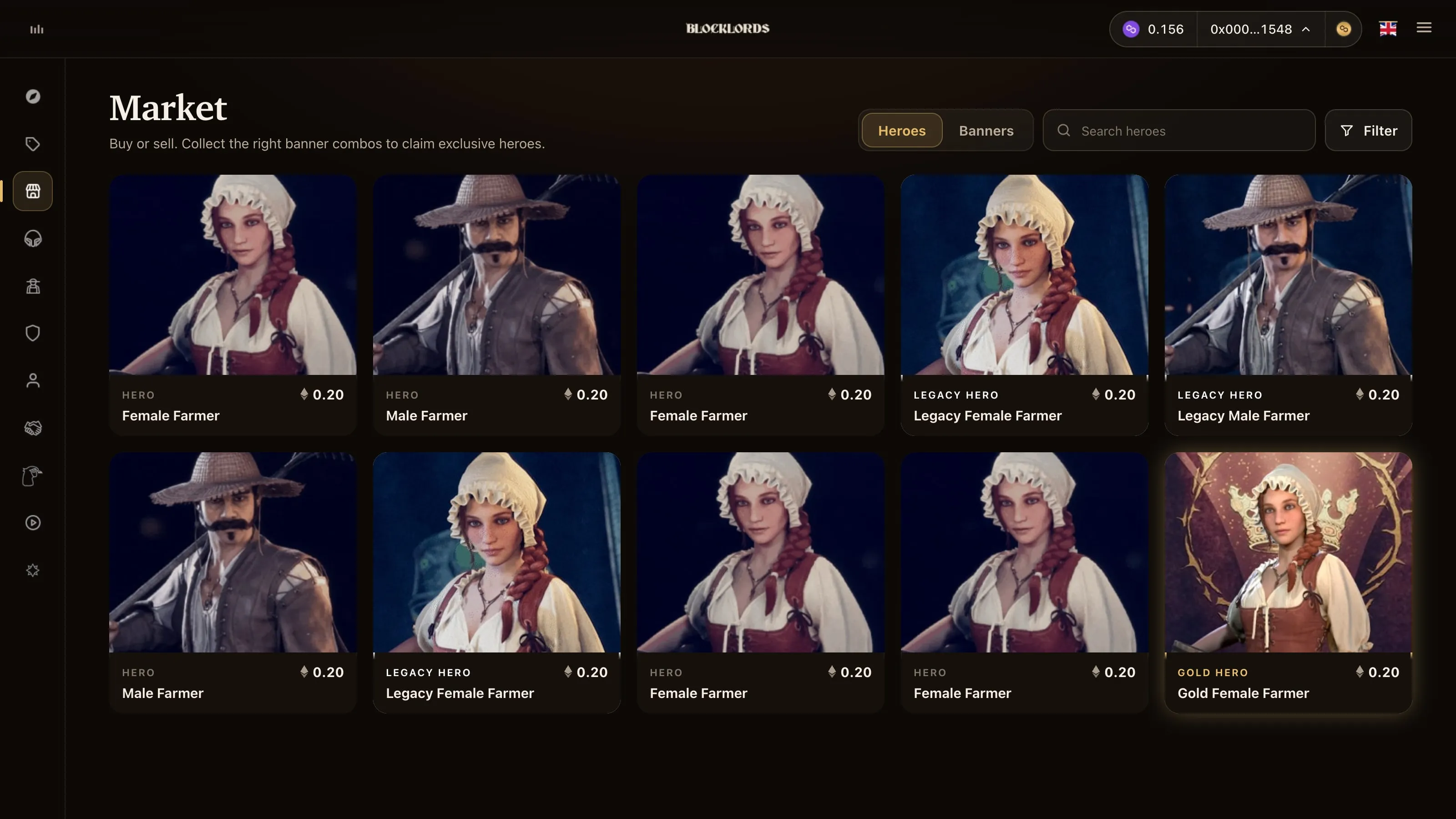
The market: one card, three tiers. The border alone tells basic, legacy and gold apart. The camera follows the edit
What brokeOn a full-body model, a new hairstyle or a small accessory is hard to see, and that change is exactly what the player is paying for.
What I decidedIn the hero store the model stays large and the camera moves to the part being edited: face and braid for hair, torso for clothes, waist for the bucket. Arrows under the panel loop through the three categories in both directions, while the price and the confirm button stay in the same place.
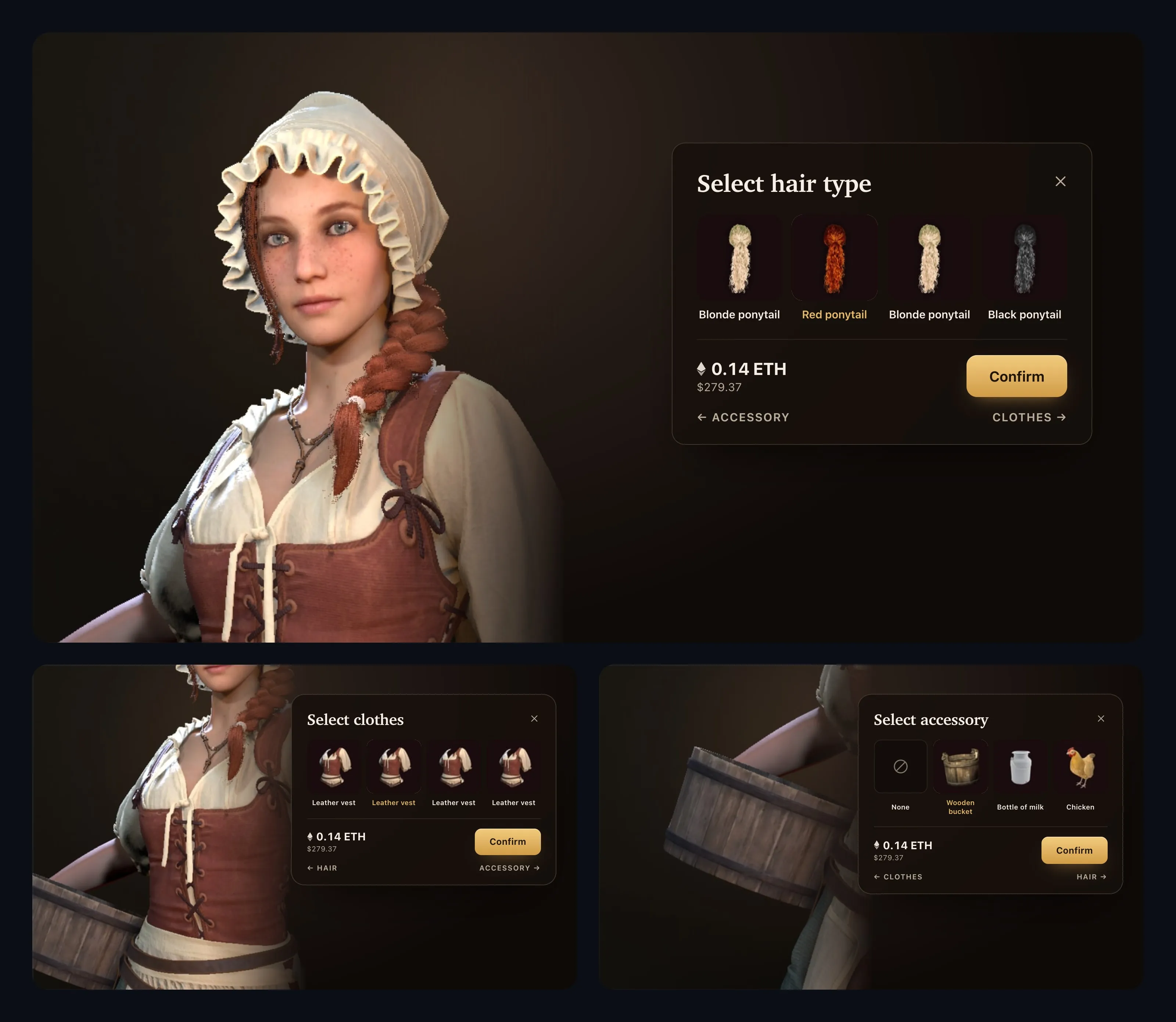
Hair, clothes, accessory: the same panel each time, with the camera on the part being changed.
My part
Blocklords began at SeaScape Network, where I was Head of Design from 2021 to 2023 and led a team of three designers. I designed the web portal: the account, the market, the dynasty tree, the hero store, the banner chests and the timed events.
It shared the design system I owned across SeaScape’s products, the same one behind Lighthouse.
More screens
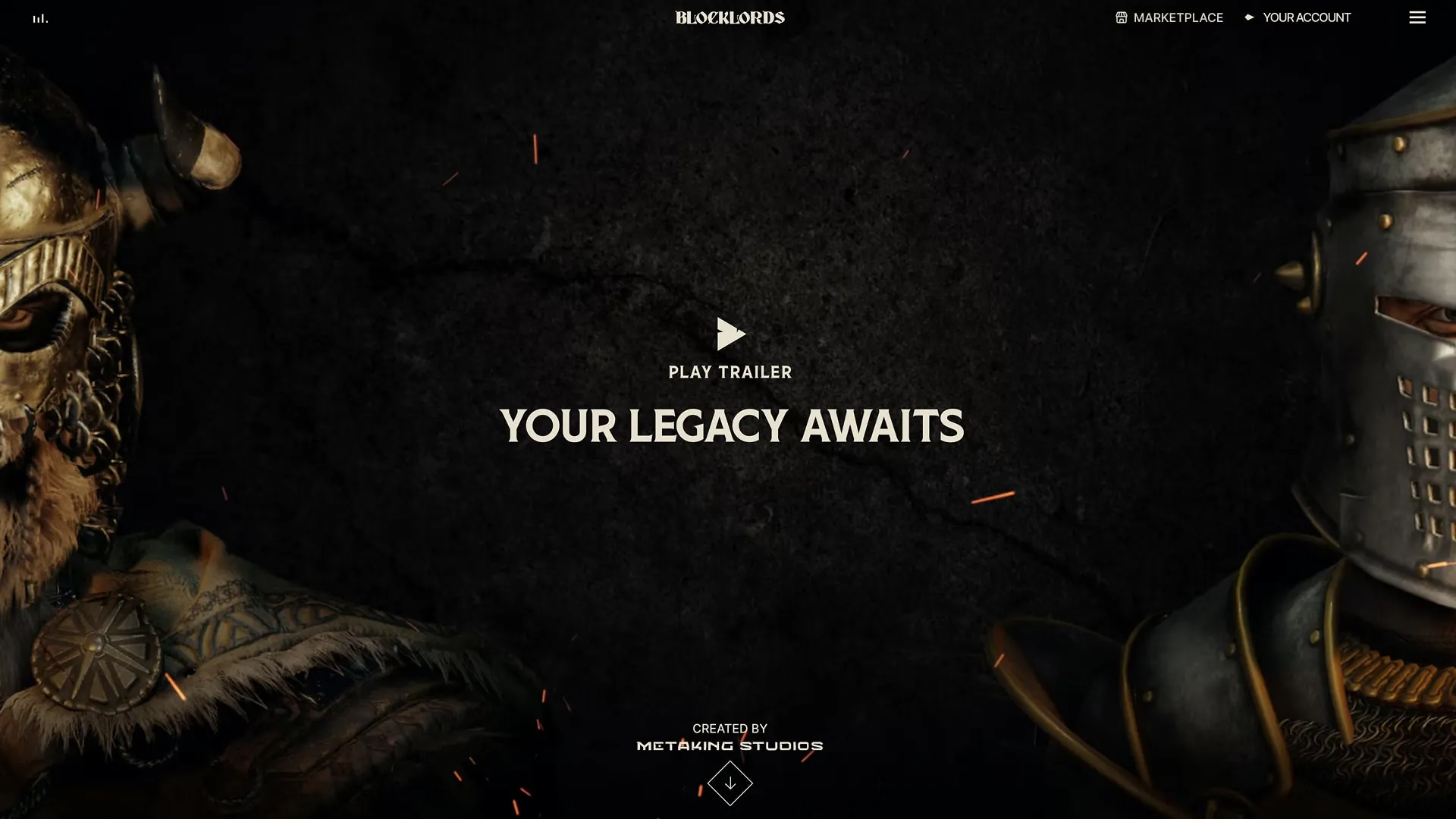
The logged-out landing: the trailer first, with the marketplace and the account one click away. 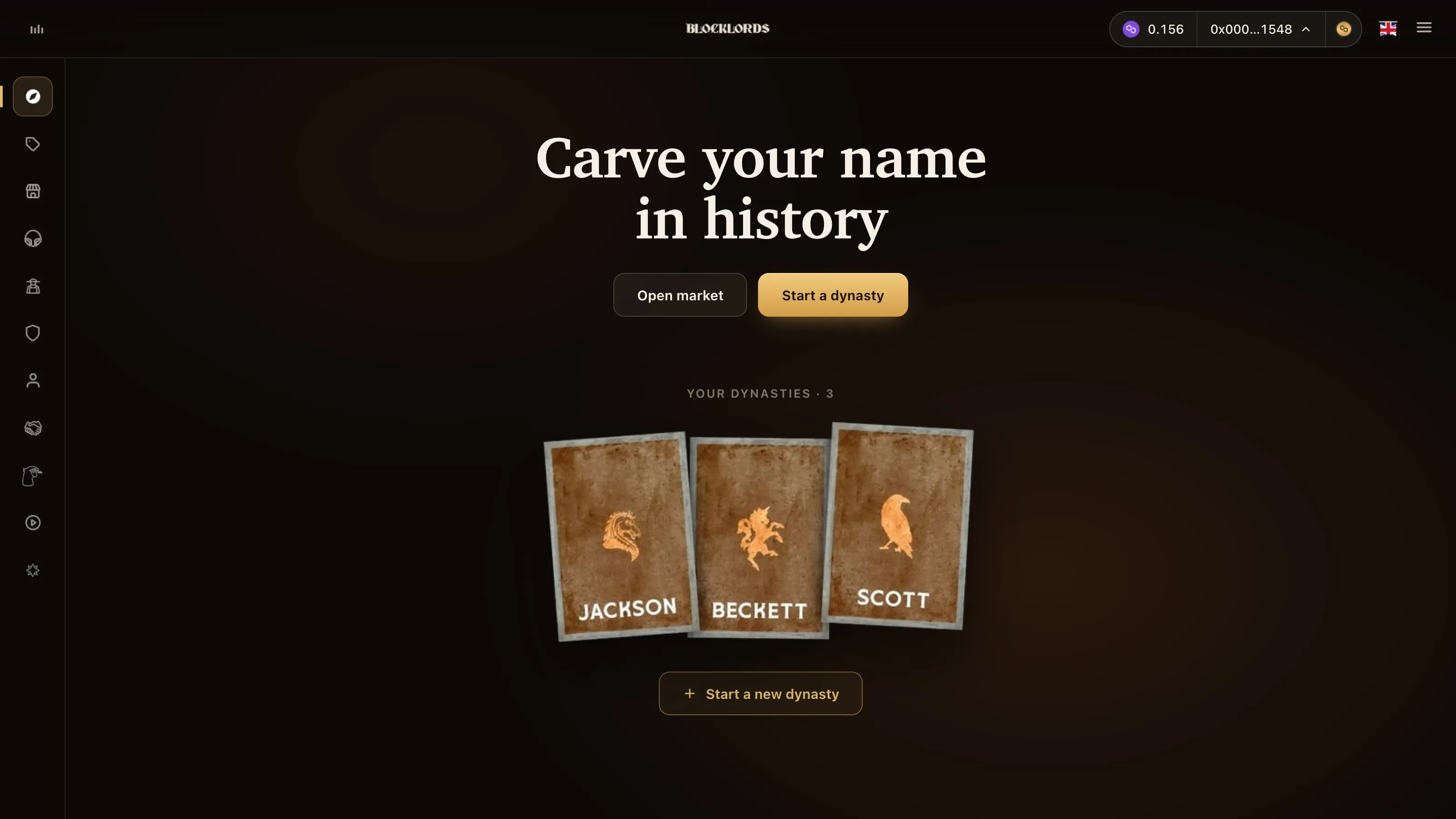
The dynasty area opens on the player’s houses, each a crest card, with a way to start another. 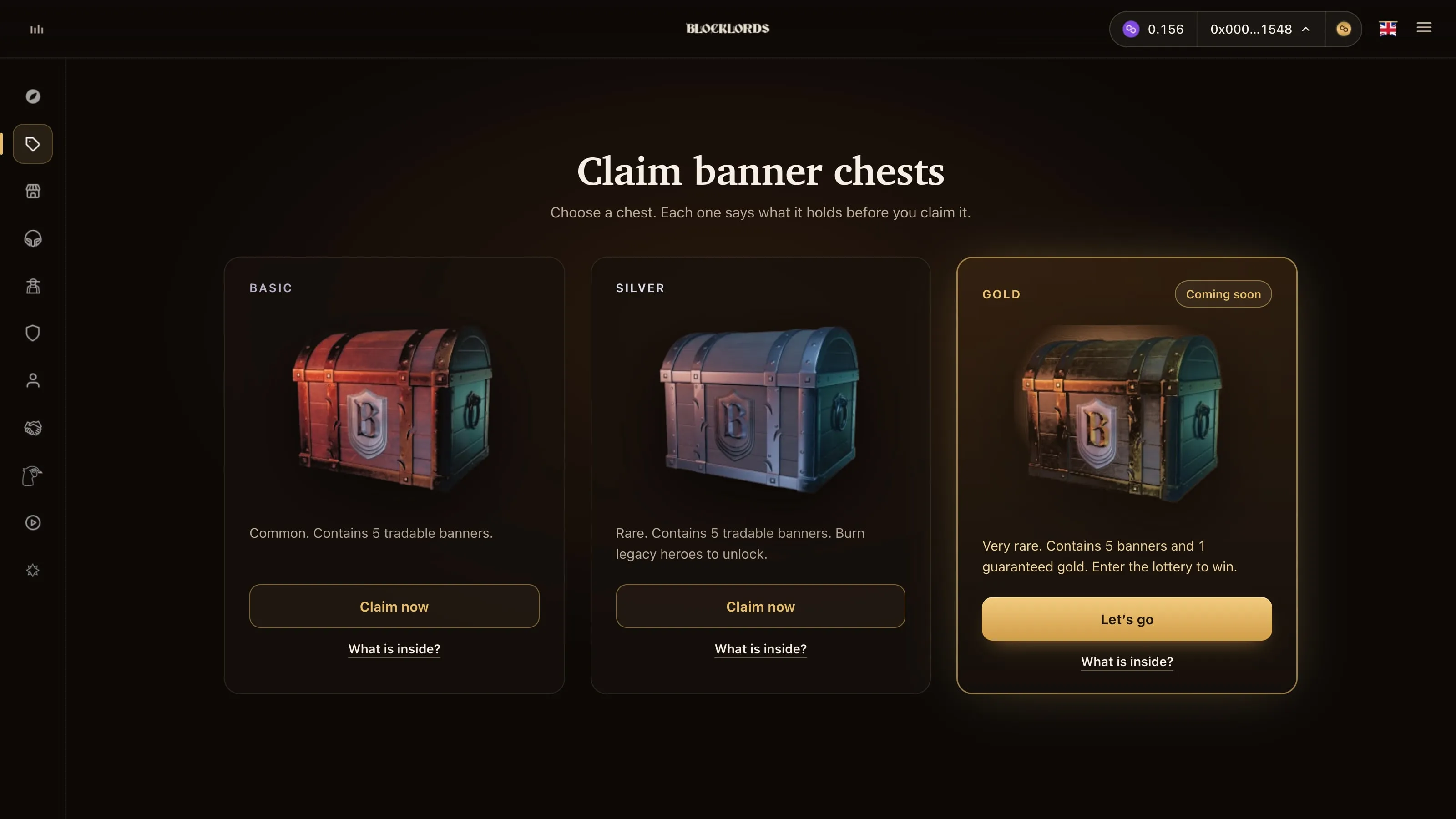
Banner chests say what they hold and what they ask before the claim: the silver chest opens by burning legacy heroes, the gold one through a lottery. 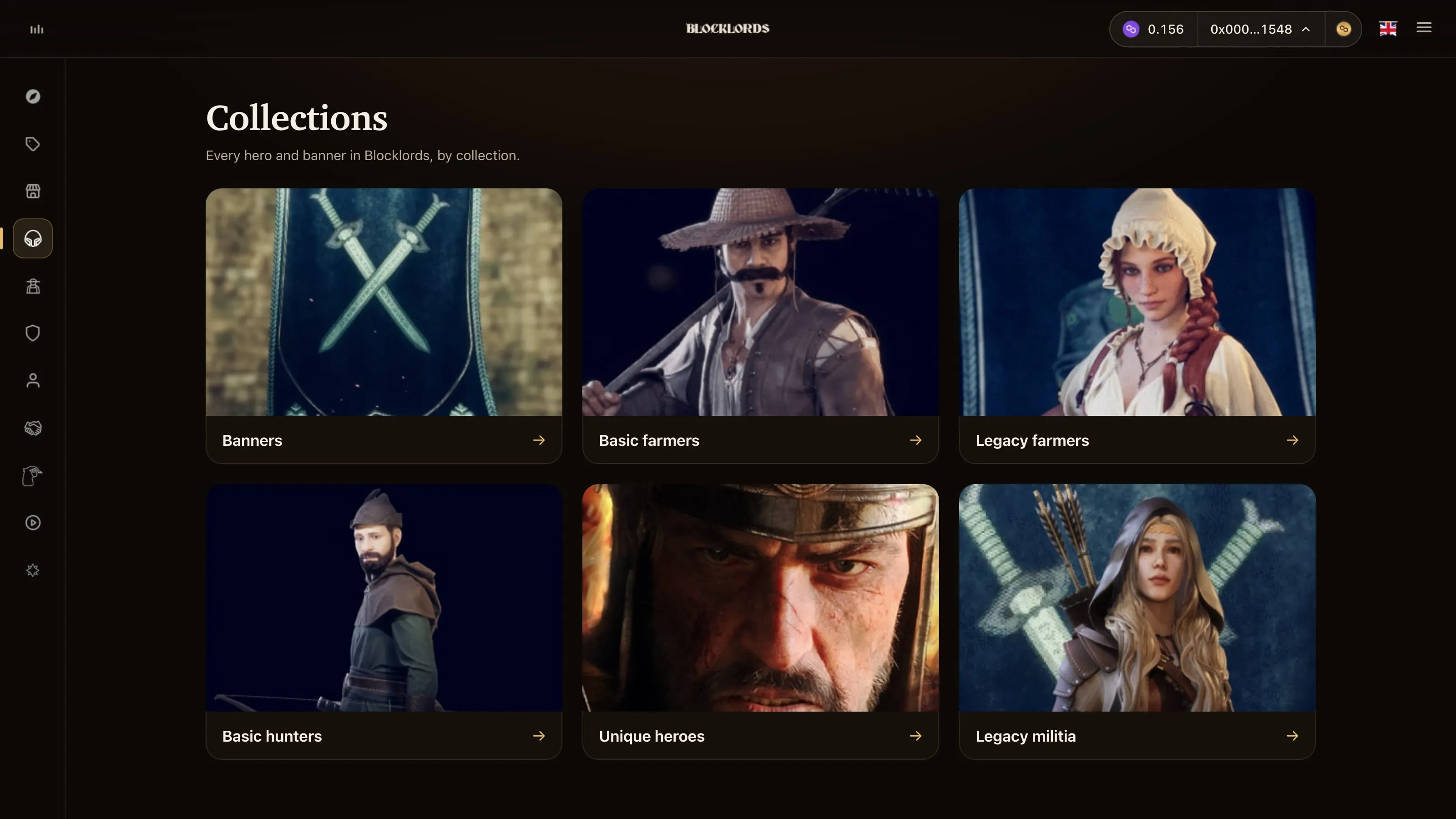
The heroes hub: six collections, from banners and basic farmers to unique heroes. 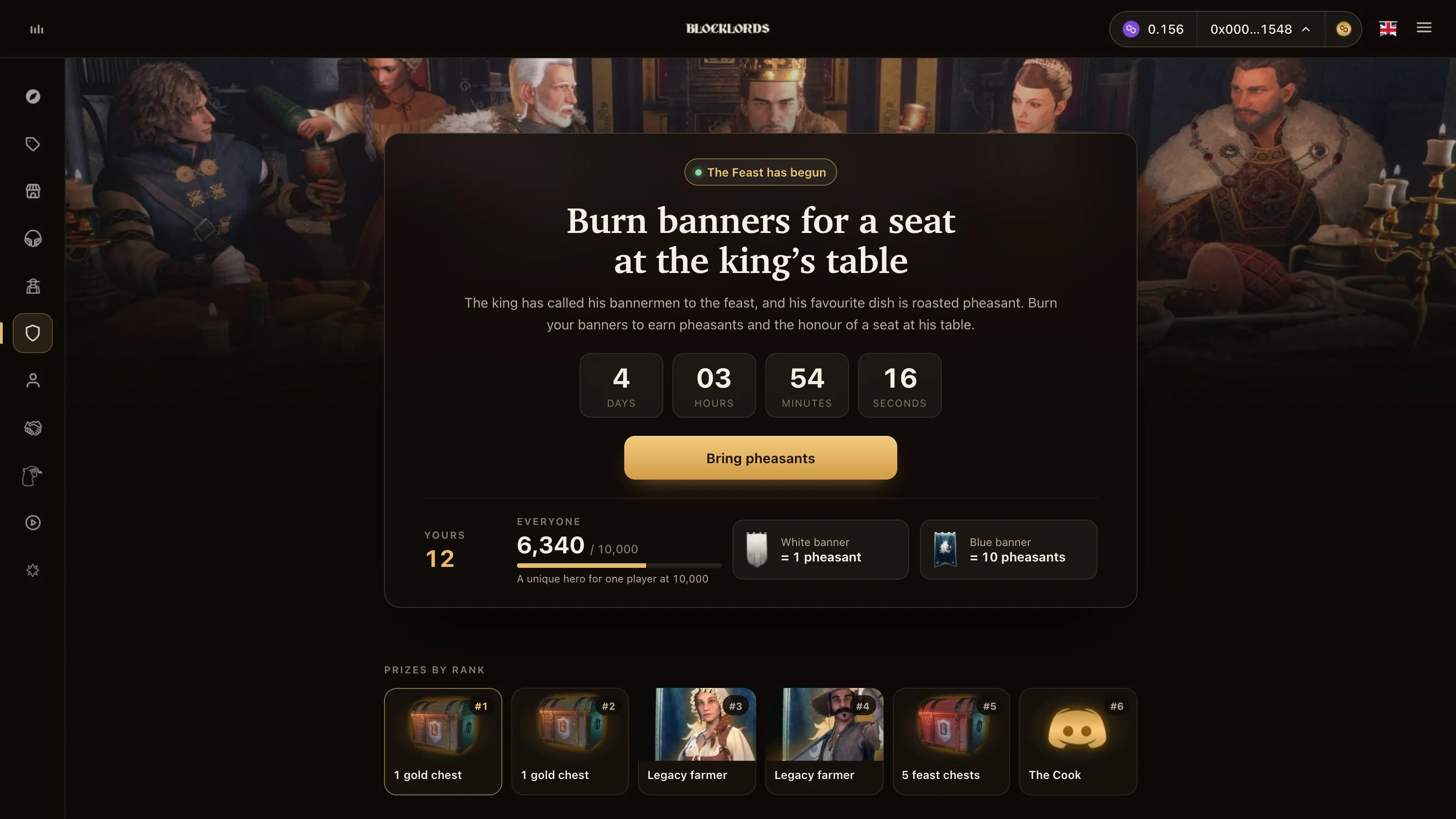
The Feast: a countdown, your pheasants beside everyone’s, the exchange rate under the main button and the prizes by rank. At 10,000 pheasants in total, one player wins a unique hero. 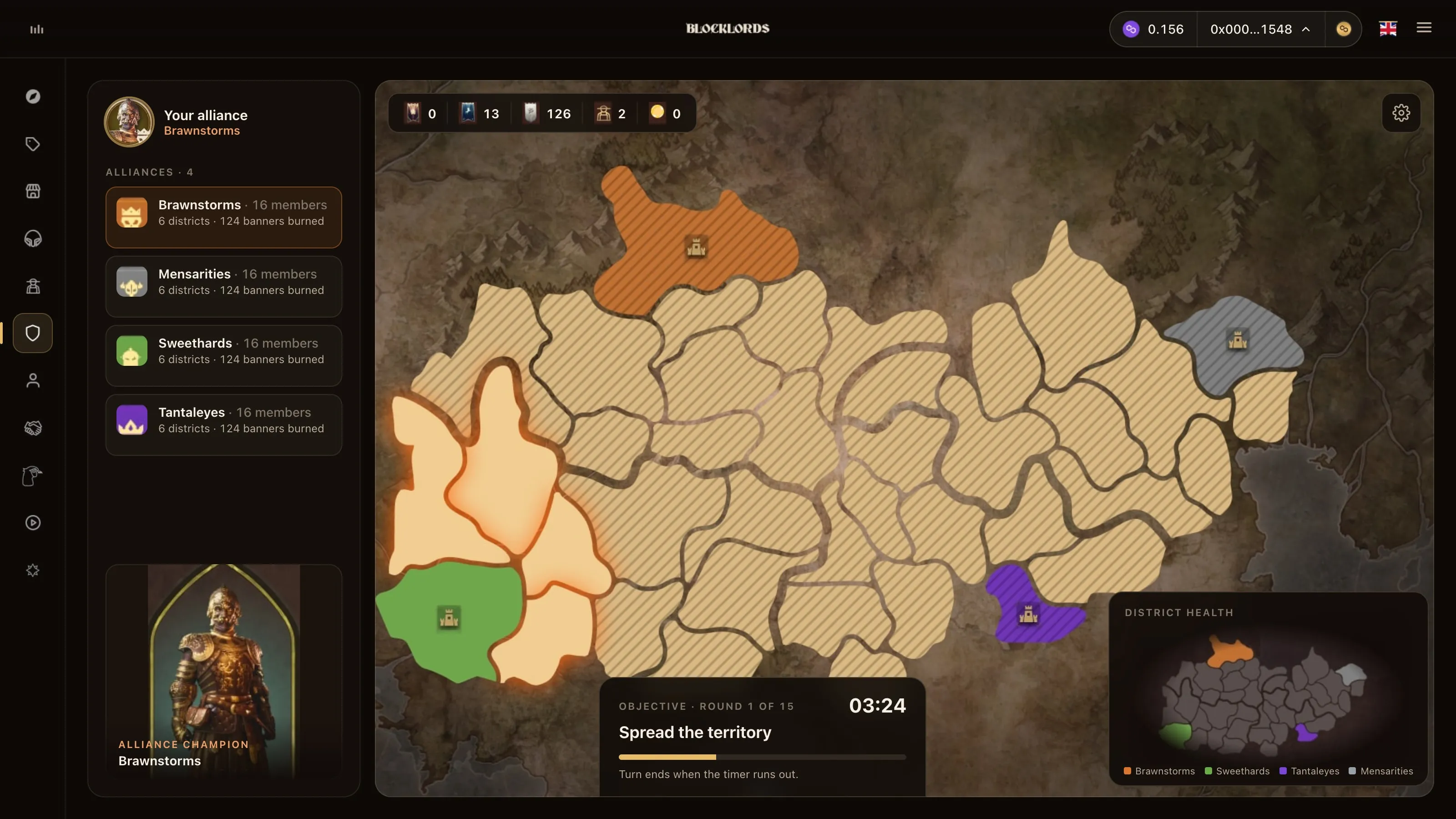
The territory map: each alliance’s districts and banners burned on the left, the round’s objective and timer below, district health in the corner.